
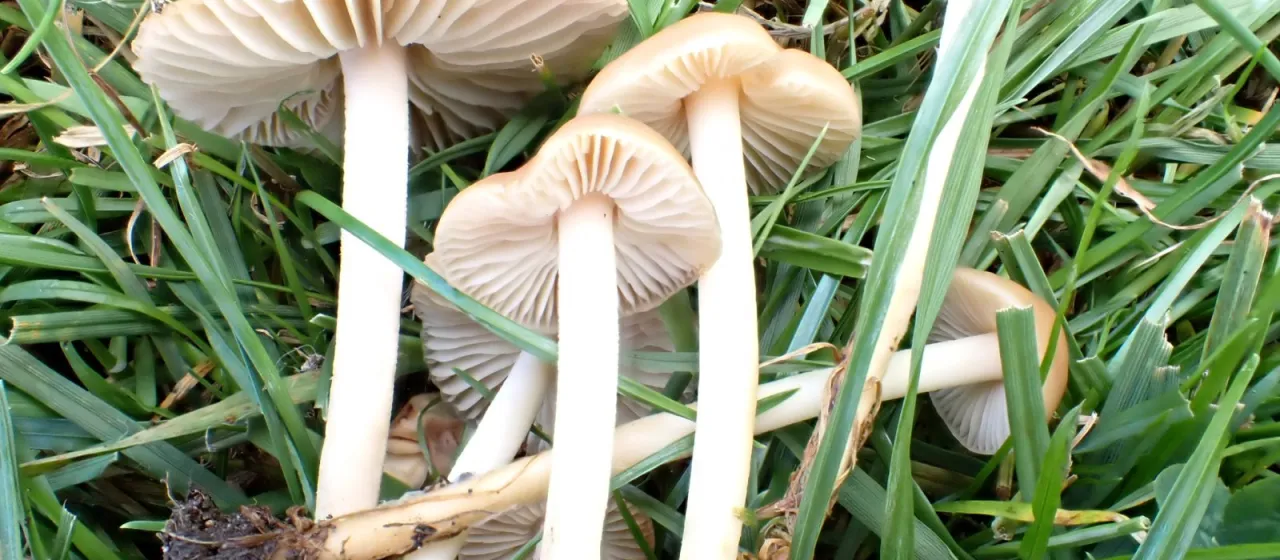
Description
The fairy ring mushroom (Marasmius oreades) is a highly esteemed edible fungus belonging to the Marasmiaceae family. Unlike many other woodland mushrooms, this species is uniquely adapted to open grasslands, meadows, and pastures. Its common name is derived from the distinct circular growth patterns, historically referred to as "fairy rings," which appear in turf due to the outward radial expansion of the mycelium.
Native to temperate regions across the Northern Hemisphere, this mushroom has a widespread distribution throughout Europe, Asia, and North America. It thrives in grassy environments where it maintains a symbiotic relationship with lawn grasses. This resilience makes it a biologically interesting subject for both mycological studies and small-scale agricultural ventures.
Botanically, the species features a small, convex cap that ranges in color from tan to light brown, becoming creamy-white as it dries. A key survival trait is its resistance to desiccation; the mushroom can enter a dormant state during dry spells and revive rapidly upon rehydration, allowing it to fruit throughout the growing season whenever conditions become favorable.
Cultivation requirements involve creating a substrate that mimics a meadow environment, characterized by well-drained, nutrient-rich soil with a slightly alkaline to neutral pH. Proper agrotechnical management focuses on maintaining consistent soil moisture and adequate aeration to prevent mycelial decay. Unlike wood-decaying fungi, this species requires a soil-based medium for optimal nutrient absorption.
- Regular hydration during dry weather to trigger fruit body formation.
- Strategic placement in partially shaded areas to prevent excessive evaporation.
- Harvesting techniques that avoid damaging the fragile underground mycelial network.
- Monitoring for common pests such as slugs or fungal gnats in damp conditions.
From a хозяйственное (economic) perspective, the fairy ring mushroom is prized in culinary circles for its spicy aroma and firm texture. It is a popular ingredient in gourmet soups, stir-fries, and as a pickled delicacy. Growing this species offers farmers and hobbyists an opportunity to diversify their production by utilizing outdoor meadow spaces that are otherwise unsuitable for traditional mushroom farming.