
Description
Myagrum perfoliatum, commonly known as bastart, is an annual herbaceous plant belonging to the Brassicaceae family. While frequently categorized as an agricultural weed that competes with cereal crops, it possesses botanical traits of interest for its oil-rich seeds, positioning it as a plant with potential industrial applications.
The native range of this species extends across the Mediterranean and Western Asia. Over time, it has established itself in various temperate regions globally. It thrives in open field environments, disturbed soils, and along roadsides, showing remarkable resilience and survival capabilities across diverse habitats.
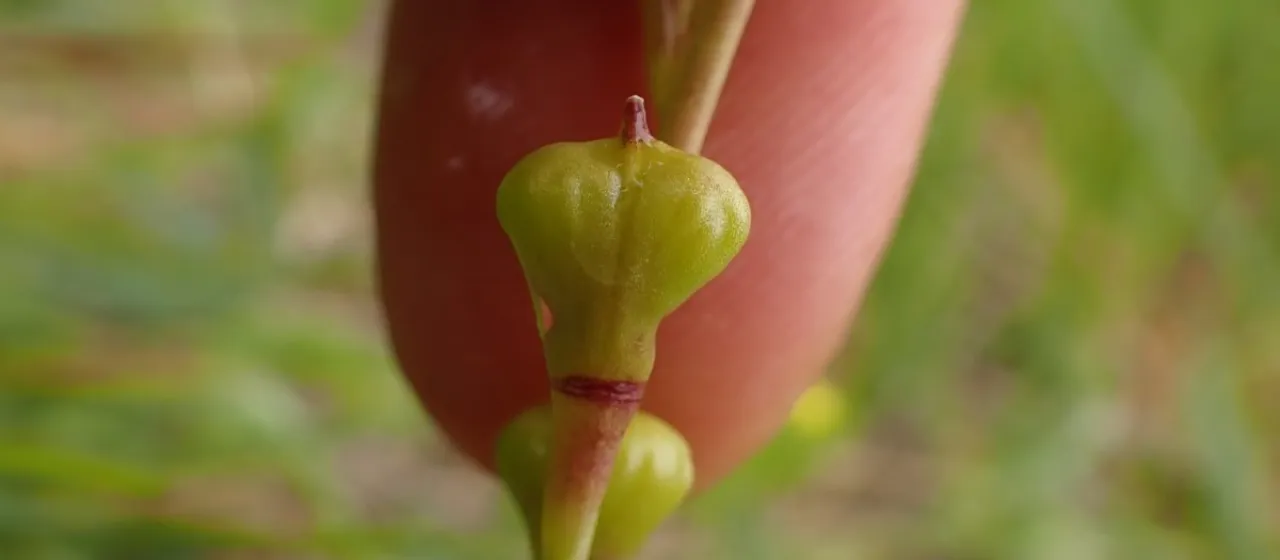
Botanically, the plant is characterized by a branched stem that can grow up to 80 cm in height. Its identifying feature is the perfoliate leaves, which wrap around the stem at the base. It produces small yellow flowers arranged in racemes, followed by unique, hard-shelled fruit pods that contain oily seeds, facilitating its effective dispersal.
In terms of agricultural requirements, Myagrum perfoliatum prefers sun-exposed locations and is well-adapted to various soil types, ranging from sandy to clay-loam. It is highly drought-tolerant, making it a robust species. Cultivation management involves standard practices such as soil preparation and, where it is considered a pest, precise herbicide application or mechanical removal.
The economic utility of the plant is primarily centered on the oil extracted from its seeds, which can be utilized in technical and industrial sectors. While researchers look into its oil potential, the primary agricultural concern remains its management within intensive farming systems, as its rapid growth can impact crop yields by competing for moisture and nutrients.
- Excellent adaptation to diverse climates.
- High seed viability and dispersal rate.
- Natural tolerance to many common agricultural soil conditions.