
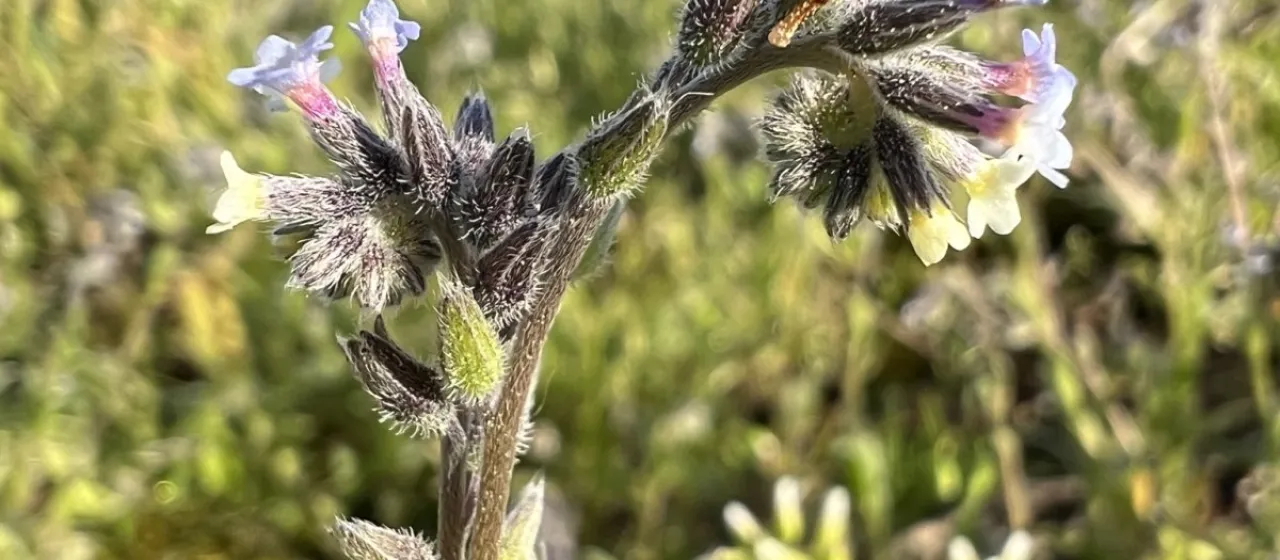
Description
The changing forget-me-not (Myosotis discolor) is an annual herbaceous plant belonging to the Boraginaceae family. In the context of modern agriculture, this species serves primarily as a valuable melliferous plant that contributes to the biodiversity of agro-ecosystems and provides essential foraging resources for local pollinators.
Native to Europe and parts of North Africa and Western Asia, the changing forget-me-not is adapted to temperate climates. It typically occupies meadows, pastures, and light-filled open areas. Its successful establishment in agricultural landscapes depends on preserving micro-habitats that mimic these natural conditions.
The botanical identity of this plant is defined by its ability to change flower color from yellow to blue or violet as they mature, which is a unique trait. It typically reaches a height of 10 to 30 centimeters and has a characteristic pubescence on its stems and leaves. The plant relies on successful seed production to ensure its presence in the following season.
Cultivation requirements involve well-drained, fertile soils with a neutral pH level. While the plant is resilient, it requires consistent moisture levels to thrive and reach full maturity. Agronomists recommend keeping the area free of aggressive broad-leaved weeds that may outcompete the young seedlings during the early stages of development.
The primary agricultural interest in this species lies in its role as a pollinator-friendly plant. By incorporating the changing forget-me-not into border strips or non-cropped land, farmers can enhance the ecosystem services that benefit adjacent crop yields. Pests, such as aphids, and diseases, particularly fungal infections like powdery mildew, are the main challenges to monitor when managing this species.