
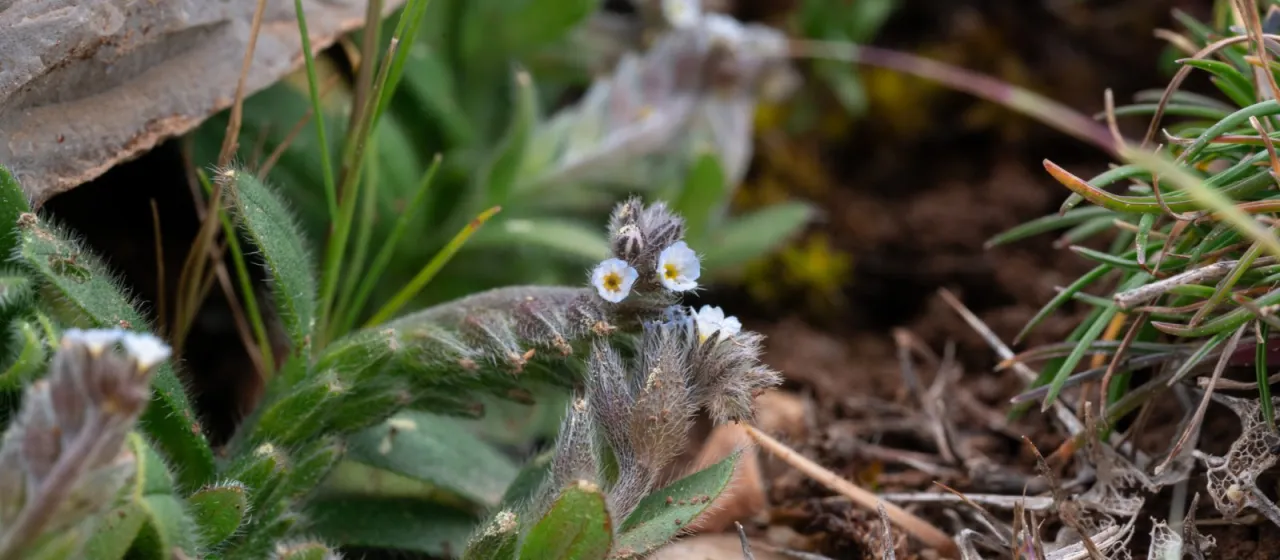
Description
The thickened forget-me-not (Myosotis incrassata) is a herbaceous plant belonging to the Boraginaceae family. While many members of the genus Myosotis are well-known in gardens, this specific species is distinguished by unique physiological adaptations that allow it to thrive in diverse environmental conditions.
Originating from temperate zones of Europe, the plant is typically found in humid meadows and riparian habitats. Its range reflects a natural adaptation to moisture-retentive soils and partially shaded environments. In agricultural and horticultural contexts, it is increasingly recognized for its resilience and decorative potential in shaded garden beds.
Botanically, Myosotis incrassata features an upright growth habit, pubescent stems, and lanceolate leaves designed to optimize transpiration rates. The inflorescences consist of small, dense flowers that bloom sequentially. The root system is relatively shallow, requiring stable soil conditions to support the plant throughout its active growth cycle.
Agronomic requirements for this crop include consistent soil moisture and a neutral pH level. It performs best in nutrient-rich loamy soils that can retain water without becoming waterlogged. Growers should ensure that site selection involves protection from direct, scorching mid-day sun, which can cause significant stress to the foliage.
The plant is primarily utilized in ornamental landscaping and ecological restoration projects. Disease management is a critical aspect of its care, as it is susceptible to powdery mildew and botrytis blight under conditions of poor air circulation or excessive humidity. Regular monitoring and thinning of plantings are recommended to maintain plant health.
- Soil preference: Moist, well-drained loam.
- Light requirement: Part shade to full sun in cooler climates.
- Main challenges: Fungal infections in high-humidity areas.