
Description
Tufted forget-me-not (Myosotis laxa) is a perennial herb belonging to the Boraginaceae family. It is a moisture-loving plant naturally occurring in wetlands, along stream banks, and in boggy meadows. In agricultural and horticultural contexts, it is recognized for its ability to thrive in wet conditions where many other species would fail to establish.
Native to temperate regions across the Northern Hemisphere, Myosotis laxa has adapted to a variety of damp environments. While it is not a primary food crop, its utility lies in its capacity to serve as a low-maintenance groundcover for naturalistic landscapes, particularly in restoration projects aiming to stabilize soil along water features and irrigation ditches.
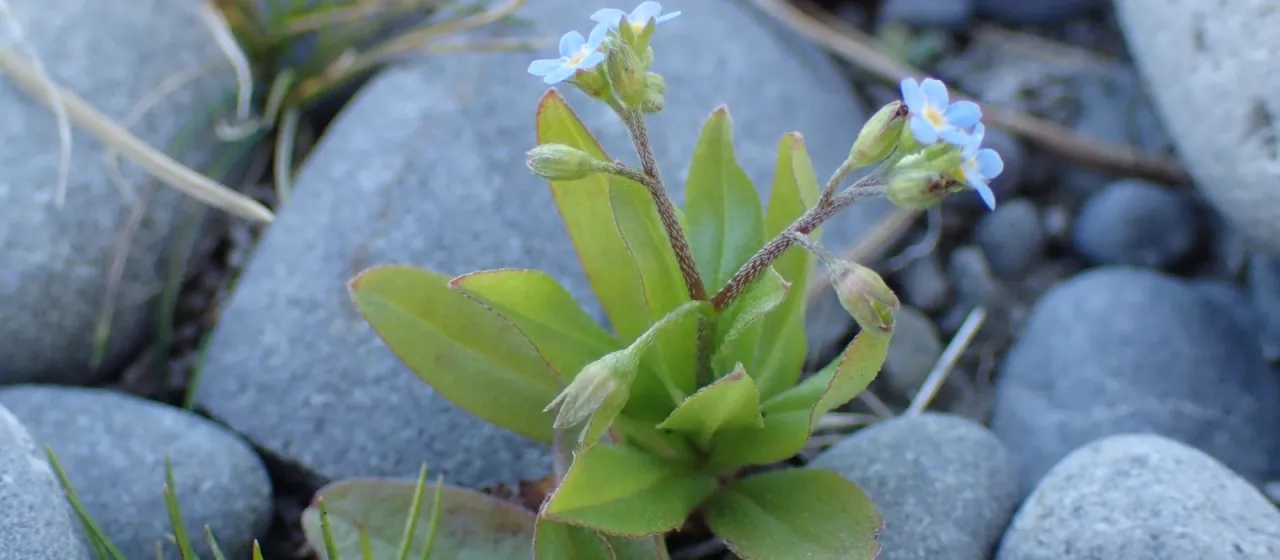
The plant exhibits distinct botanical characteristics, including stems that often grow horizontally and root at the nodes to form dense mats or tufts. Its leaves are lance-shaped, and it produces delicate, pale blue flowers with yellow centers throughout the late spring and summer months. This growth pattern provides effective ground coverage and helps prevent erosion.
Cultivation requirements for this species are centered on moisture management. It prefers rich, loamy, or organic-heavy soils that remain constantly moist. While the plant can tolerate light shade, it thrives best when provided with consistent hydration. Basic agricultural practices involve periodic mulching to retain soil moisture and clearing invasive weeds that might compete for nutrients in wetland conditions.
The plant is generally robust but susceptible to specific stressors when cultivated out of its native habitat. Common diseases include powdery mildew or grey mold, which are triggered by poor air circulation or stagnant water. Insect pests such as aphids or flea beetles may occasionally affect the foliage, but these can be managed through integrated pest management strategies without the need for intensive chemical interventions.