
Description
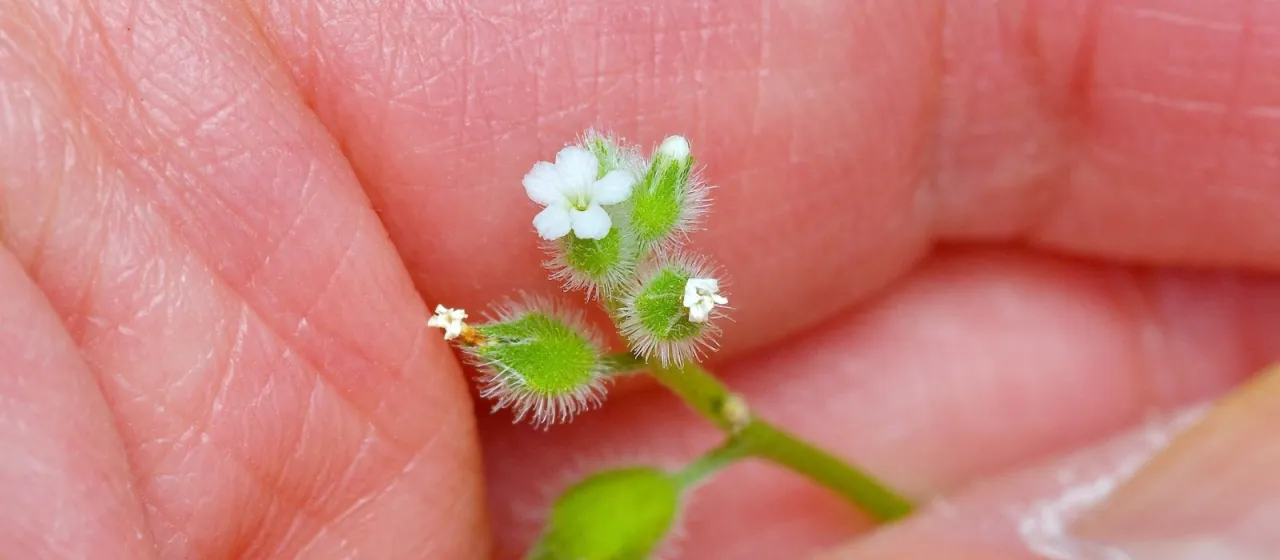
Large-seeded forget-me-not (lat. Myosotis macrosperma) is a herbaceous plant belonging to the Boraginaceae family. It is a distinct species noted for its specific seed morphology, which distinguishes it from more common ornamental varieties of forget-me-nots. This plant is primarily recognized for its ecological role in moist temperate habitats.
The origin of this species is traced to North America, where it typically inhabits floodplains, wet woods, and riparian corridors. It is well-adapted to environments that provide consistent moisture throughout the growing season. The plant's distribution reflects its preference for cool, shaded, or semi-shaded areas where the soil remains reliably damp.
Botanically, Myosotis macrosperma displays an upright growth habit with pubescent leaves and stems. Its characteristic small, sky-blue flowers are arranged in helicoid cymes. The primary taxonomic feature that defines the species is the size of its nutlets, which are significantly larger than those found in many other Myosotis species, serving as a reliable identification marker.
Agronomic requirements for this crop focus on maintaining a high-humus, moisture-retentive soil structure. Cultivation success depends on preventing soil desiccation, which can lead to rapid plant decline. While it is not a heavy feeder, consistent levels of soil organic matter and protection from extreme midday heat are essential for maintaining optimal health and vigor during the flowering stage.
The plant is utilized in ornamental landscape gardening and botanical conservation efforts. In agricultural settings, it requires moderate care, with pest management focused on aphid control and disease prevention. Common issues include:
- Powdery mildew triggered by poor airflow.
- Root stress due to prolonged drought conditions.
- Infestations of sap-sucking insects during early spring.