
Description
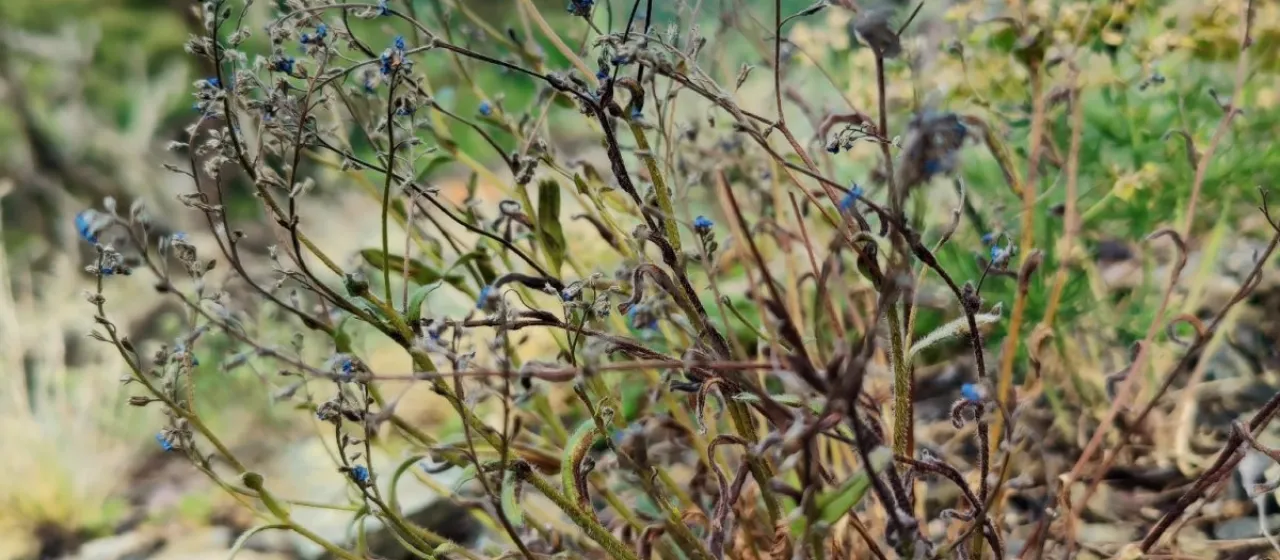
Narrow-leaf forget-me-not (lat. Myosotis stenophylla) is a herbaceous perennial plant belonging to the Boraginaceae family. It is distinct from other species in the genus due to its unique, elongated, narrow foliage and its natural adaptation to rocky, high-altitude terrain.
The species is native to the high-mountain regions of Central Asia. It typically thrives in alpine meadows and rocky slopes where drainage is excellent. In horticultural practice, it is primarily used as an ornamental species, valued for its ability to create dense, low-growing carpets in rock gardens and alpine landscape projects.
Botanically, the plant features a basal rosette of narrow leaves and branched stems that support delicate, light-blue or azure flowers. These inflorescences provide significant aesthetic value, especially in early spring. Its compact growth habit makes it an ideal candidate for soil stabilization in ornamental gardening.
Cultivation requirements involve providing well-drained, nutrient-moderate, and slightly alkaline or neutral soil. The species is highly sensitive to waterlogging; therefore, the agronomic focus should be on moisture control and substrate permeability. It thrives best in locations with high light intensity, though it can tolerate partial shade in warmer climates.
Management of this crop involves several key horticultural practices:
- Ensuring high permeability of the soil by adding coarse sand or fine gravel.
- Limiting irrigation during the dormancy period to prevent root rot.
- Applying light mineral fertilization in early spring to support vegetative growth.
- Pruning spent stems to maintain the plant's shape and encourage longevity.
Common plant health issues include root rot and powdery mildew, which are often consequences of improper drainage or insufficient air circulation. Pests such as aphids and spider mites can occasionally affect the foliage; integrated pest management (IPM) strategies, including the use of soaps or specific insecticides, are recommended for effective control.