
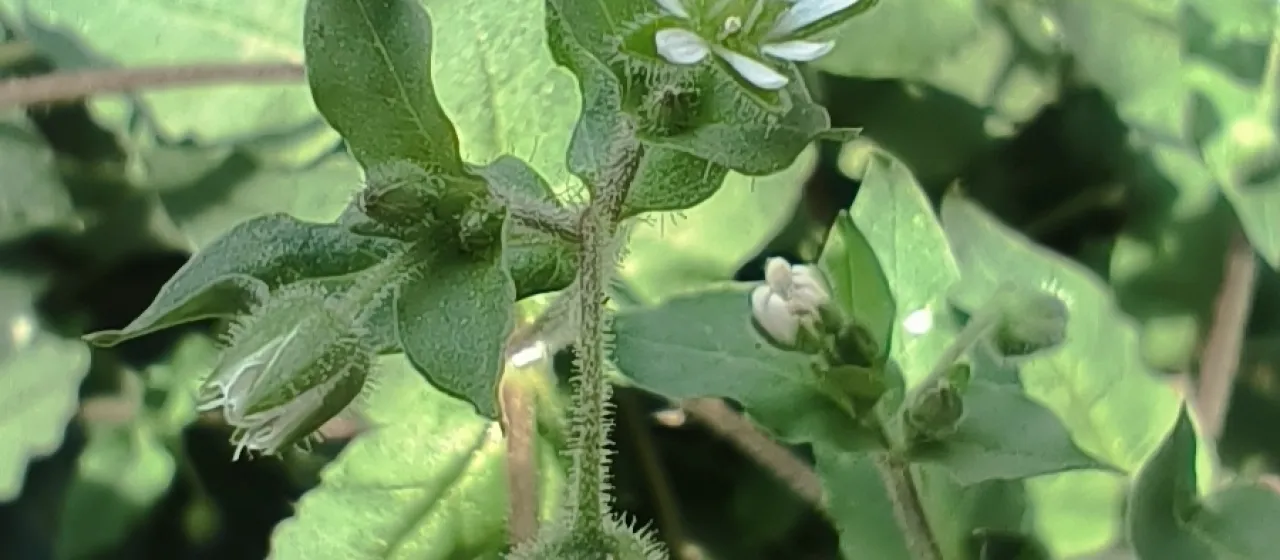
Description
Giant chickweed, scientifically known as Myosoton aquaticum, is a perennial herbaceous plant belonging to the Caryophyllaceae family. In agricultural settings, it is primarily recognized as a persistent weed that thrives in wet conditions, often outcompeting crops in damp fields, irrigation channels, and fertile soil zones.
The plant is widely distributed across the temperate regions of Europe and Asia. It prefers habitats with high moisture availability and nitrogen-rich soils, often establishing itself in places where agricultural drainage might be insufficient. Due to its adaptability, it frequently encroaches on vegetable farms and cereal crops planted in low-lying, damp areas.
Botanically, it features weak, branched stems that can grow up to 70 cm in length and are capable of rooting at the nodes. The leaves are heart-shaped, and the flowers are characterized by five deeply bifid white petals. Its growth habit is rapid, and it produces significant amounts of seeds that allow it to colonize new agricultural patches efficiently.
Successful agricultural management of giant chickweed requires a focus on soil moisture control. Key tactics include installing proper drainage, regular mechanical cultivation of the soil, and implementing integrated pest management. The use of pre-emergent or post-emergent herbicides can also be effective when targeting infestations before the crop canopy closes.
The plant possesses little economic value as a crop but serves as an indicator of wet, high-fertility soil conditions. While livestock may consume it in wild pastures, it is generally considered a nuisance in formal agriculture. The species is susceptible to various pathogens such as powdery mildew and may act as a host for pests like aphids, which can then migrate to adjacent, more valuable crops.