
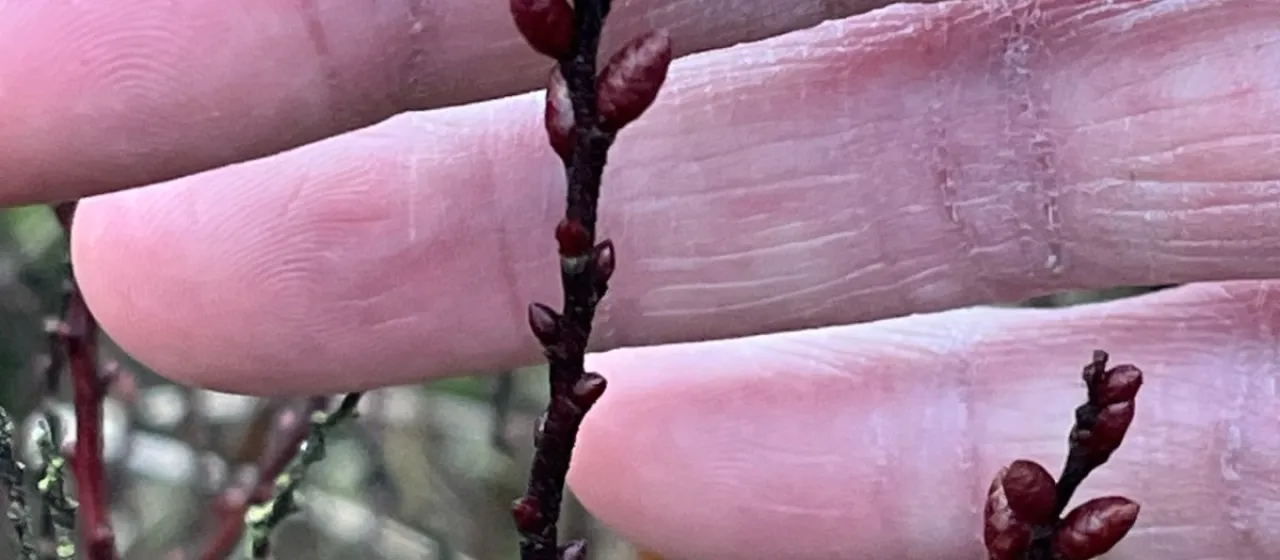
Description
Bog myrtle (lat. Myrica gale) is a deciduous shrub belonging to the Myricaceae family. Widely recognized for its resinous, fragrant leaves, this plant has been valued for centuries in Northern Europe and North America. It is a hardy perennial that thrives in wet, acidic environments where many other agricultural crops would fail.
The plant originates from the wetlands and marshy areas of the Northern Hemisphere. It is native to northern parts of Europe, North America, and parts of Asia. Because of its natural adaptation to waterlogged soils, it is commonly found growing in peat bogs, along pond margins, and in fens. Its range demonstrates a high tolerance for varying temperatures, provided that soil moisture remains consistent.
Botanically, Bog myrtle is a branching shrub typically growing between 0.5 and 1.5 meters in height. The leaves are simple and alternate, featuring a serrated upper edge and numerous tiny golden glands on the underside that secrete essential oils. The plant is dioecious, meaning that separate male and female individuals are required for seed production, which is a vital factor for commercial propagation and breeding.
Cultivation requires specific environmental parameters to be successful. The soil must be acidic (pH 4.0–6.0) and rich in organic matter, such as peat. Bog myrtle requires full sun to partial shade and a consistently moist substrate. When establishing a plantation, drainage management is less critical than irrigation management, as the plant suffers significantly during prolonged dry spells. Propagation is most efficiently achieved through cuttings or root division.
The economic and practical uses for Bog myrtle are diverse:
- Culinary applications: Used as a flavoring agent in traditional brewing and as a seasoning in wild-game dishes.
- Medicinal use: Utilized in traditional remedies for its anti-inflammatory and antiseptic properties.
- Repellent qualities: The essential oils are highly effective as a natural insect repellent.
In terms of plant health, Bog myrtle is generally robust, but it can be susceptible to fungal leaf spots if airflow is poor and humidity levels are excessively high. Pests such as aphids may attack young growth during the spring. Maintaining optimal plant density and checking the acidity of the growing medium are the best strategies to ensure a healthy and productive crop.