
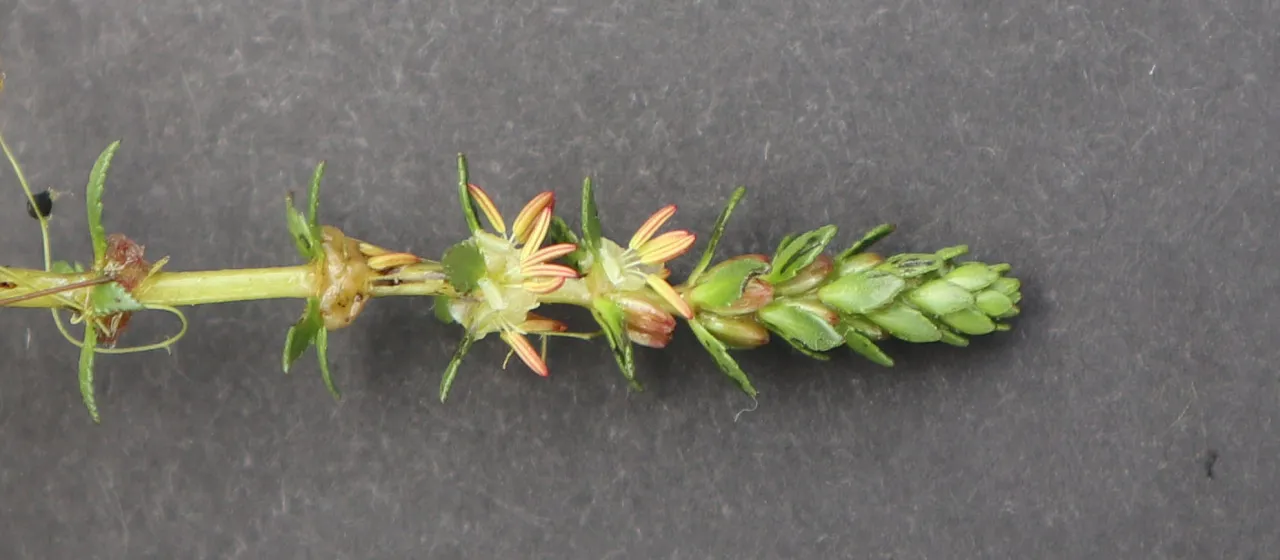
Description
Loose watermilfoil (Myriophyllum laxum) is a perennial aquatic plant species belonging to the Haloragaceae family. This plant is well-known for its submerged and emergent growth habits, serving as a critical component in the aquatic ecosystems of freshwater ponds and wetlands.
The plant is native to the southeastern parts of the United States. It typically thrives in shallow, stagnant, or slow-moving water bodies, including swamps, ponds, and slow rivers. It requires a stable, nutrient-rich substrate for successful root anchoring, which allows it to spread and form dense, oxygenating aquatic colonies.
Botanically, the species is defined by its slender, flexible stems adorned with fine, feathery, whorled leaves. These leaves are highly adapted to underwater photosynthesis, providing an intricate structure that filters light and offers essential refuge for microfauna and juvenile fish populations in its native habitat.
Cultivation of Myriophyllum laxum requires a controlled environment. The plant demands high light intensity to prevent legginess and thrives in temperatures between 20°C and 26°C. It is particularly sensitive to water quality, requiring soft to medium-hard water with low carbonate hardness to maintain its delicate, vibrant green foliage and structural integrity.
In terms of хозяйственное (economic) utility, this plant is extensively used in aquarium hobbyist circles and for natural biofiltration in small artificial garden ponds. It is highly efficient at stripping nitrates and phosphates from the water column, thus acting as a biological filter. While generally hardy, the plant can be susceptible to algal overgrowth competing for nutrients and potential damage from aquatic snails, necessitating regular monitoring to maintain a healthy aquatic environment.