
Description
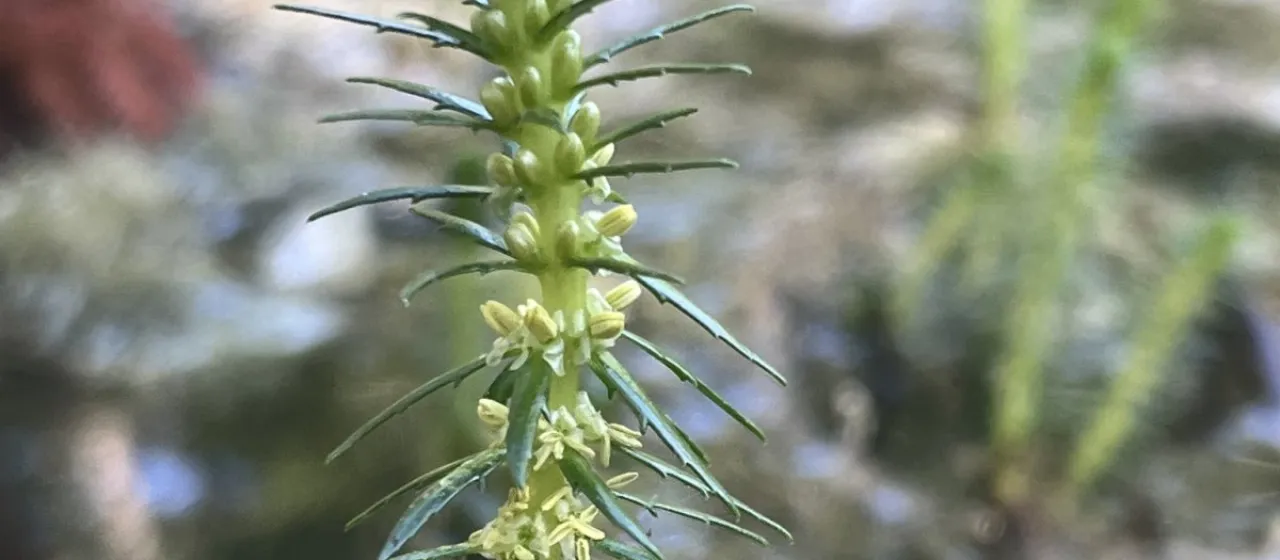
Cutleaf watermilfoil (Myriophyllum pinnatum) is a submerged perennial aquatic plant belonging to the Haloragaceae family. It is recognized for its ability to adapt efficiently to shallow water environments, where it forms dense underwater mats that are critical for maintaining the health and structure of the aquatic ecosystem.
The natural range of this species is primarily focused in North America. In its native habitat, the plant favors still or slow-moving waters such as ponds, lakes, and channels with soft, silty substrates. A temperate climate provides the most favorable conditions for its robust vegetative growth and propagation.
Botanically, the plant is characterized by feathery, pinnately divided leaves arranged in whorls around the stem. The stems can reach significant lengths, often branching near the surface. The root system is relatively rudimentary, primarily serving to anchor the plant, while nutrient absorption occurs mostly through the foliage directly from the water column.
Cultivation requirements for this species are moderate. It thrives in well-lit environments with neutral to slightly acidic water parameters. The ideal temperature range for active growth is between 18 and 25 degrees Celsius. Effective management involves monitoring plant density to prevent it from becoming overly dominant in confined water systems.
- Filtration of excess nitrates and phosphates from the water.
- Providing essential refugia for juvenile fish and aquatic invertebrates.
- Ornamental use in ponds and water gardens.
- Natural suppression of harmful algal blooms.
Typical challenges in maintenance include potential fungal infections during periods of poor water circulation and infestation by specific aquatic pests. In competitive natural settings, the persistence of Myriophyllum pinnatum is often influenced by the presence of invasive macrophyte species that may outcompete it for light and nutrients.