
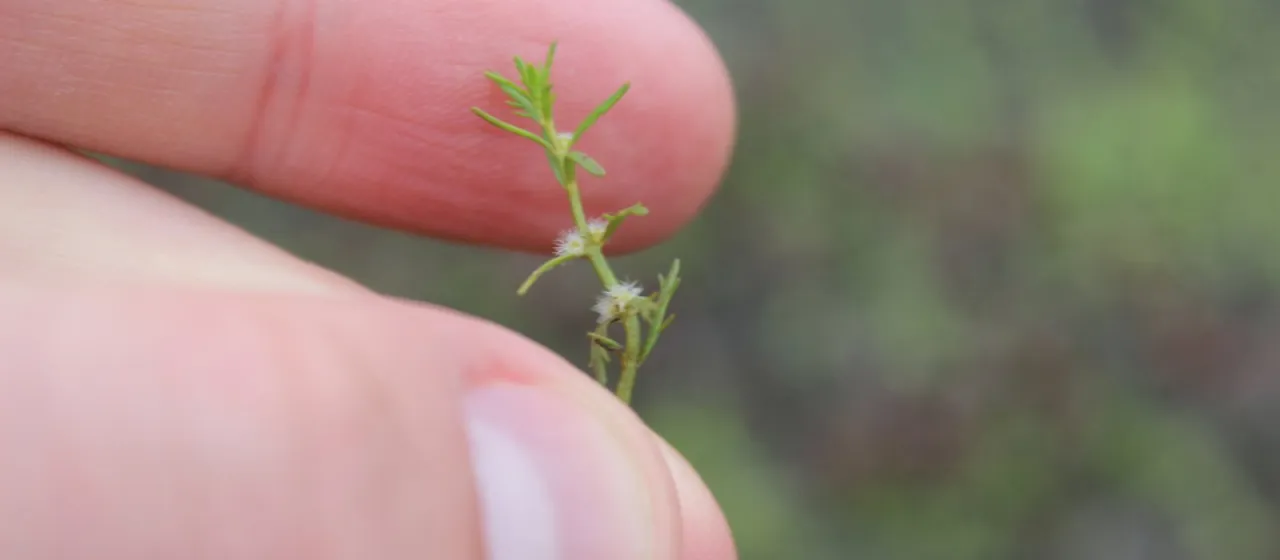
Description
Myriophyllum propinquum, commonly referred to as a species of watermilfoil, is a perennial aquatic plant belonging to the Haloragaceae family. This species is well-known for its submerged growth habit, often found in freshwater environments where it provides essential habitat for various aquatic microfauna.
Originating primarily from Australia and New Zealand, this plant has adapted to a wide range of temperate and tropical freshwater habitats. It typically occupies the shallow margins of lakes, ponds, and slow-flowing streams, where it plays a critical role in oxygenating the water and stabilizing the substrate with its roots.
The botanical structure of Myriophyllum propinquum is defined by its whorled, pinnate leaves that grow along a submerged stem. The leaves are light green, sometimes displaying reddish pigments under high light intensities. The plant relies on its ability to absorb nutrients directly from the water column, which allows it to thrive in nutrient-rich aquatic environments.
Agricultural and horticultural success with this species depends on maintaining optimal water conditions. It prefers water temperatures between 20°C and 26°C and requires moderate to high light levels to prevent leggy growth. While not demanding in terms of soil, a substrate rich in organic matter can significantly enhance the growth rate and overall vitality of the plant.
In terms of practical utility, it is widely utilized for its phytoremediation capabilities. It is highly effective at reducing nitrate and phosphate levels in ponds and large aquarium systems. Furthermore, it is a staple in aquatic landscaping for its delicate texture and ability to create dense, vibrant underwater forests that enhance the aesthetic appeal of water features.
- Requires regular pruning to maintain density.
- High efficiency in nutrient uptake from water.
- Susceptible to epiphytic algae under improper light conditions.
- Easily propagated via stem cuttings.