
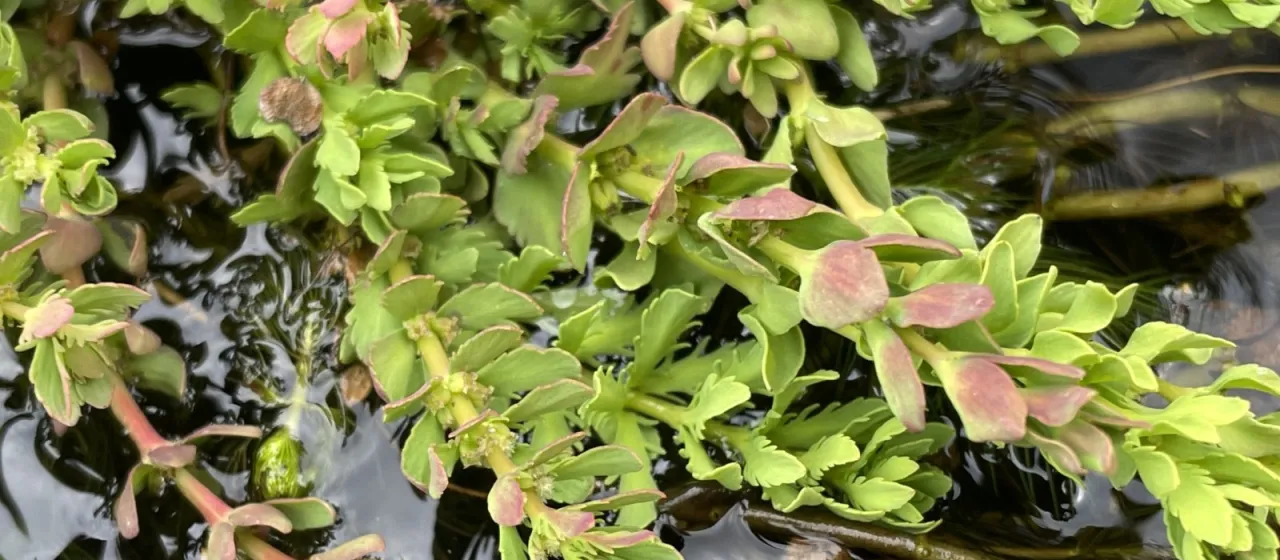
Description
Myriophyllum quitense is a perennial aquatic plant species belonging to the Haloragaceae family. Within the context of controlled environment agriculture and aquaculture, this species is recognized for its significant role in nutrient cycling, oxygenation, and providing structural habitat within aquatic systems, making it a valuable biological resource.
Originating from the high-altitude regions of the South American Andes, including areas in Ecuador, Peru, and Bolivia, this plant is naturally adapted to cooler freshwater environments. Its ability to thrive in diverse water temperatures makes it a versatile species for managed water bodies across various climatic zones that can mimic its native ecological niches.
The botanical structure of Myriophyllum quitense features submerged, slender stems covered in delicate, whorled, pinnate leaves. This morphology provides a large surface area, which is highly efficient for absorbing nutrients directly from the water column. The plant produces small flowers that may emerge above the water surface depending on environmental factors and depth.
Successful cultivation requires attention to water chemistry and light availability. The plant prefers slightly acidic to neutral water and benefits from supplemental CO2 in intensive production systems. It is essential to manage light intensity to prevent the overgrowth of epiphytic algae, which can compete with the plant for nutrients and sunlight, eventually leading to reduced biomass quality.
- Rapid growth rate when provided with adequate nitrogen and phosphorus.
- Vegetative propagation via stem cuttings is the primary commercial method.
- Resilient to a range of water temperatures (18°C–24°C).
- Effective in stripping nitrates from closed-system aquaculture water.
Commercially, Myriophyllum quitense is utilized in aquascaping, as a bio-filter in fish farming systems, and in environmental restoration projects to improve water quality. Typical plant health issues include nutrient deficiencies leading to tissue degradation, and susceptibility to infestations by aquatic insects or snails that feed on the soft stem tissue if the population density is not managed correctly.