
Description
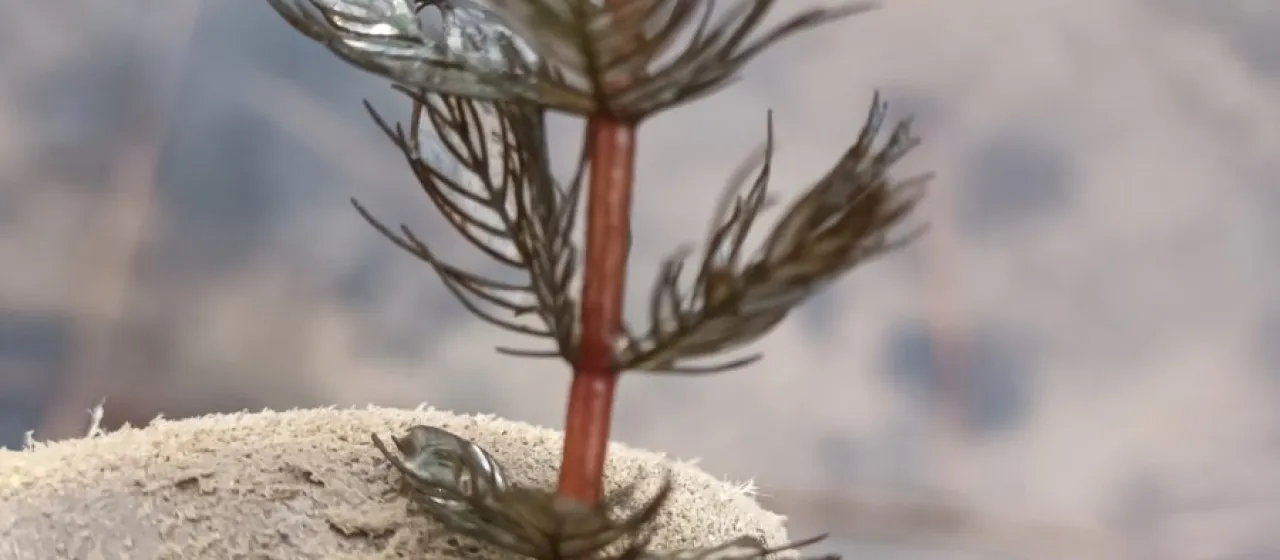
Eurasian watermilfoil (Myriophyllum spicatum) is a perennial aquatic plant species belonging to the Haloragaceae family. This species is a true hydrophyte, spending almost its entire lifecycle submerged beneath the water surface, emerging only to produce floral spikes that extend above the water level for pollination.
The native range of this plant extends across Europe, Asia, and North Africa. It has successfully naturalized in many other parts of the world, demonstrating exceptional resilience in various aquatic environments. It typically inhabits stagnant or slowly moving freshwater bodies, favoring nutrient-rich silty bottoms that provide a stable foundation for its root system.
Botanically, the plant is characterized by long, branched stems that can grow up to several meters in length, densely covered with whorled, feathery leaves. This foliage structure is highly adapted for absorption of nutrients directly from the water column. The roots, while present, serve primarily as an anchoring mechanism rather than for significant nutrient uptake from the substrate.
Regarding its cultivation and management, Eurasian watermilfoil requires minimal intervention due to its rapid growth rate. In controlled environments, it thrives in temperatures ranging from 15 to 25 degrees Celsius. Because it absorbs nitrogen and phosphorus directly from the water, it is highly valued for maintaining water quality in artificial reservoirs and managed water systems.
The main areas of practical application include:
- Bioremediation and filtration of wastewater in natural treatment systems.
- Enhancement of biodiversity in artificial ponds, providing habitat for aquatic fauna.
- Use in ornamental landscaping for pond interiors, contributing to a balanced aquatic ecosystem.
Common issues in cultivating this species involve susceptibility to specific aquatic insects that feed on the foliage and stems. Disease outbreaks, often manifesting as localized rotting or necrosis, are usually triggered by environmental stressors such as fluctuating water chemistry, inadequate light levels, or extreme temperatures that disrupt the plant's physiological balance.