
Description
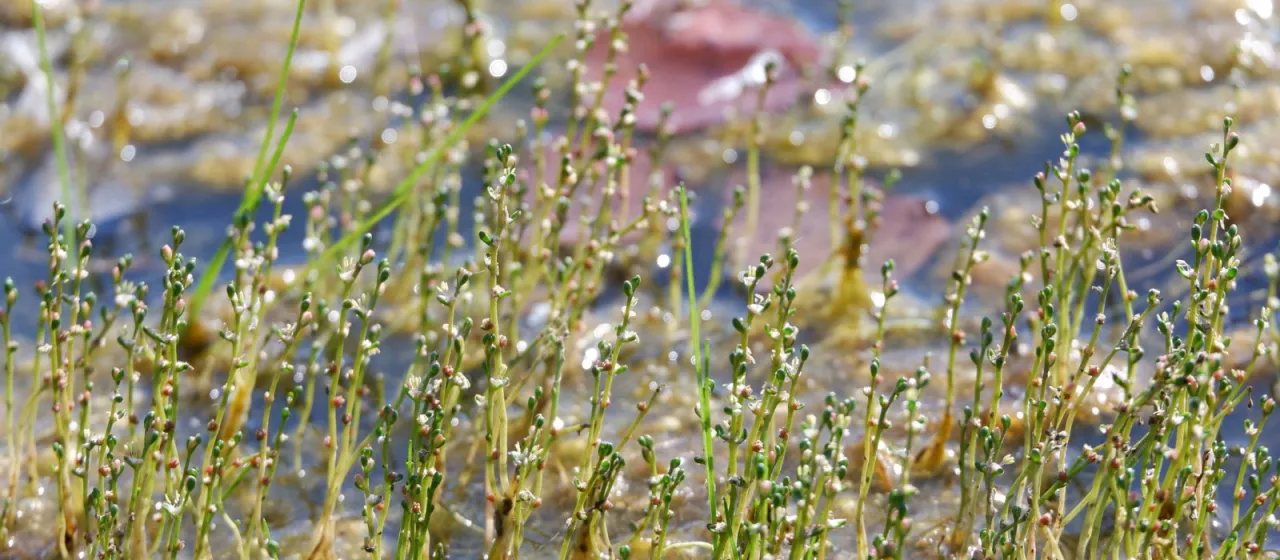
Slender watermilfoil (Myriophyllum tenellum) is a perennial aquatic plant belonging to the Haloragaceae family. Unlike other species in the genus Myriophyllum, which typically have feathery leaves, this species is noted for its simple, needle-like stems that rise from submerged stolons.
The plant is native to North America, specifically found in the northeastern United States and southeastern Canada. It thrives in oligotrophic, clear-water lakes and ponds, where it anchors itself in sandy or rocky substrates. It is a vital component of clean aquatic ecosystems, reflecting high water quality in its natural habitat.
Botanically, Myriophyllum tenellum is characterized by its slender, erect stems that usually reach heights between 5 and 15 centimeters. The leaves are minute, scale-like, and whorled or alternate, giving the plant a unique, almost grass-like appearance underwater. It spreads slowly through a network of creeping rhizomes.
In terms of cultivation, it requires specific environmental conditions to thrive. It needs bright, full-spectrum lighting and stable water temperatures, ideally between 18°C and 24°C. The substrate should be lean and nutrient-rich without containing high levels of decaying organic matter, which can cause the delicate stems to rot.
The primary use of this species is in advanced aquascaping and aquatic botanical research. It is highly valued by hobbyists for creating naturalistic "grassy" foregrounds in aquaria. Due to its slow growth rate and sensitivity to water chemistry, it is considered a premium, challenging plant for experienced keepers.
Common issues encountered during cultivation include:
- Invasions by filamentous algae that compete for light and nutrients.
- Root rot caused by anaerobic conditions in the substrate.
- Stunted growth due to fluctuations in pH and CO2 levels.