
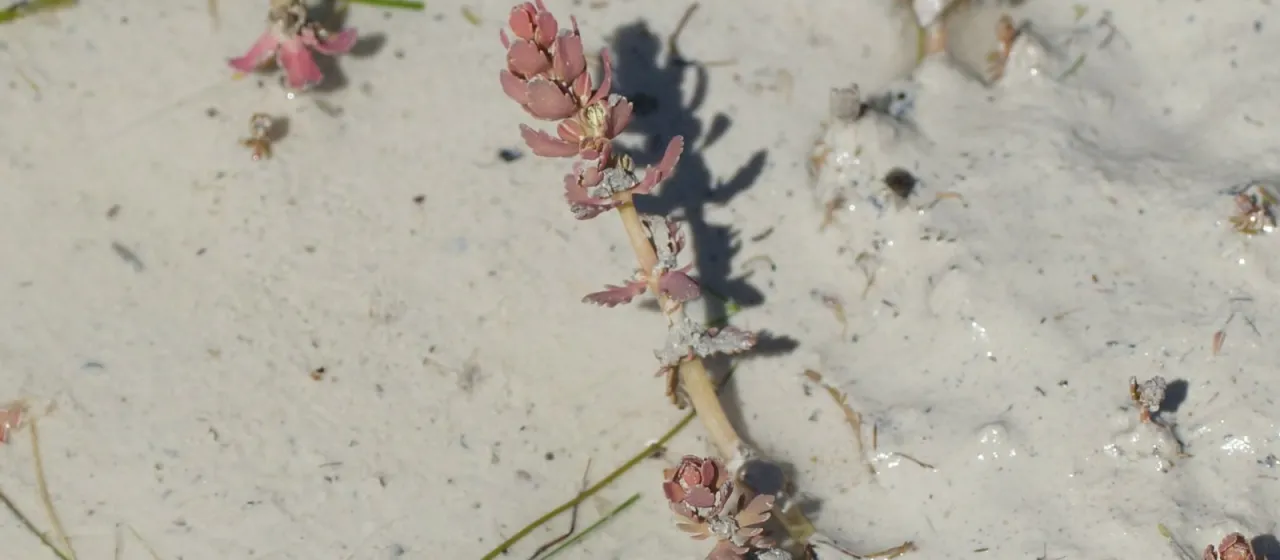
Description
Myriophyllum verrucosum is a perennial aquatic plant species belonging to the Haloragaceae family. Known commonly as a type of water milfoil, this species is essential in aquatic botany for its role in maintaining water quality and providing structural complexity in submerged environments.
The plant is native to Australia, where it thrives in a wide range of freshwater habitats. Its distribution is closely linked to its ability to adapt to varying light intensities and water temperatures. While not a traditional terrestrial crop, its role in specialized aquaculture and ecological restoration makes it an important subject for aquatic plant management.
Botanically, Myriophyllum verrucosum is defined by its whorled, pinnate leaves and small, wart-like protuberances along the stems, from which its specific epithet is derived. These stems are highly flexible and capable of reaching significant lengths in stable water conditions, often forming dense underwater meadows that serve as primary habitats for aquatic fauna.
Cultivation requirements involve monitoring the nutrient levels in the water. The plant excels in substrates ranging from silt to sand. Optimal growth occurs in still or slow-moving waters where phosphorus and nitrogen levels are balanced. In controlled settings, it is important to prevent nutrient overloading, which can trigger algal blooms and suppress the growth of the milfoil.
- Requires sufficient sunlight for photosynthesis.
- Thrives in alkaline to neutral water conditions.
- Can be propagated through stem cuttings for restoration projects.
- Sensitive to certain aquatic herbicides.
The primary economic and environmental use of this plant is in phytoremediation, where it helps remove excess nutrients from water bodies. It is also highly valued in the aquarium and ornamental pond industry. Common health issues include fungal infections during poor water quality and infestations by aquatic snails or insects that graze on the delicate foliage.