
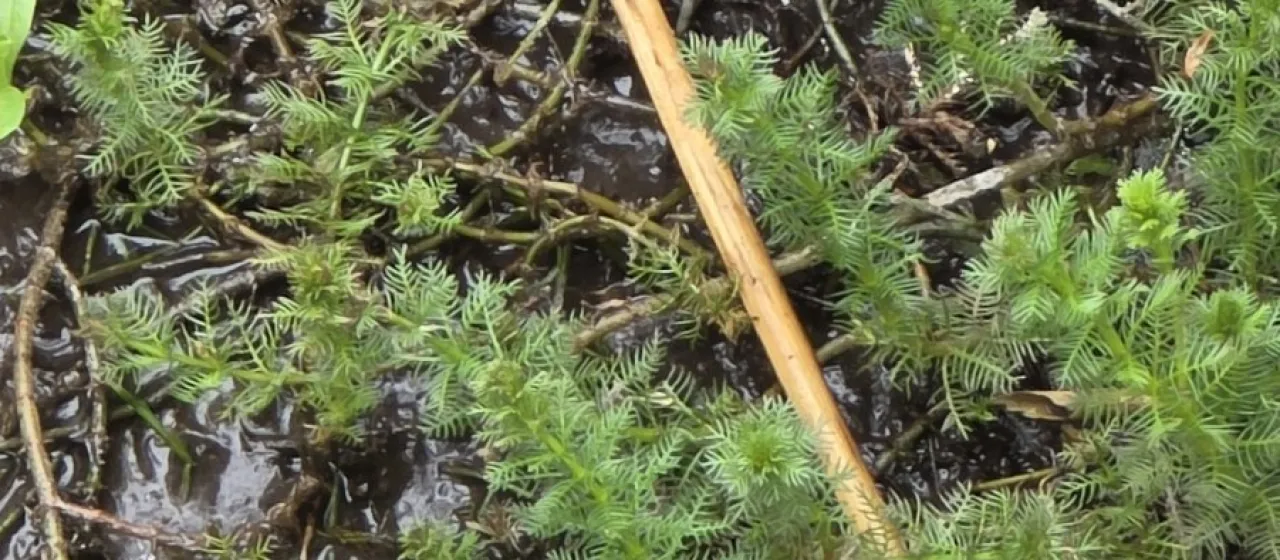
Description
Whorled watermilfoil (Myriophyllum verticillatum) is a submerged perennial aquatic plant belonging to the Haloragaceae family. Recognized for its structural complexity, this plant plays an essential role in maintaining the biological balance of freshwater systems and is widely studied for its use in agricultural water management.
The native range of this species extends across the temperate zones of the Northern Hemisphere. It is frequently utilized in aquaculture and managed wetlands due to its high efficiency in nutrient uptake from water columns. While not a traditional crop, it serves as a critical biological agent in sustainable water treatment projects.
Botanically, the plant features long, slender stems adorned with whorled, feathery leaves that are deeply pinnately divided. This morphology maximizes the surface area, facilitating rapid nutrient absorption and oxygen production. The plant develops small, emergent inflorescences that rise above the water surface during the flowering period, distinguishing it from related species.
Optimal growth requires nutrient-rich silt substrates and stagnant or slow-moving water bodies. Temperature sensitivity is moderate, with optimal development occurring in the 15–25°C range. Proper light penetration is vital for sustaining the plant's metabolic activity, making depth management an important factor in its cultivation or maintenance in managed ponds.
- Acts as a natural biofilter for water purification.
- Provides essential spawning substrates for various fish species.
- Serves as a habitat for beneficial aquatic macroinvertebrates.
In terms of plant health, the species can be susceptible to epiphyte overgrowth, which restricts sunlight, and damage from specialized insect herbivores. Effective management involves monitoring water chemistry to prevent sudden fluctuations that could impact the plant's health or trigger excessive algae blooms that compete for resources.