
Description
Nutmeg (Myristica fragrans Houtt.) is a prominent evergreen tropical tree belonging to the family Myristicaceae. Known primarily for its seeds, this plant produces two distinct spices: nutmeg and mace. In its natural form, the tree can grow significantly tall, but under commercial management, it is pruned to facilitate efficient harvesting of the mature fruit.
The native range of the species is limited to the Moluccas or Spice Islands of Indonesia. Its cultivation requires a humid, tropical climate with abundant rainfall and temperatures between 25°C and 30°C. Today, the leading producers of this crop include Indonesia and Grenada, where the tropical environment supports the plant's year-round growing cycle.
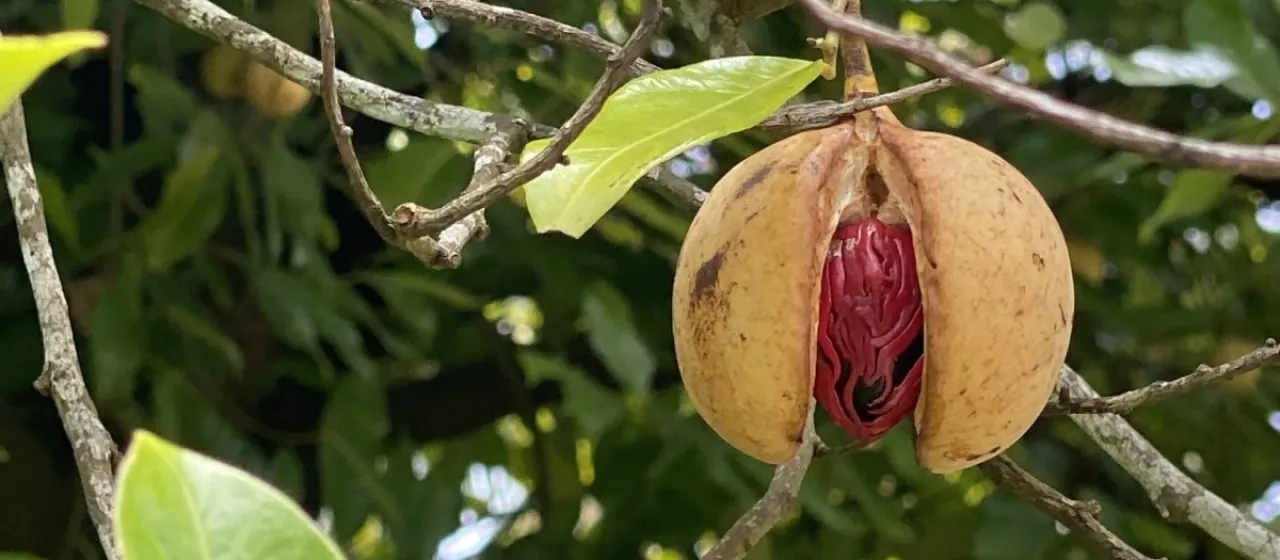
Botanically, Myristica fragrans is a dioecious species, meaning that individual trees are typically either male or female. This reproductive nature necessitates careful selection of planting material to ensure proper cross-pollination. The leaves are glossy and leathery, while the fruit is a fleshy drupe that splits open when fully ripe to reveal the seed covered by a vibrant red aril, known as mace.
Agricultural success depends on high-quality, well-drained, and nutrient-rich soils. The tree is intolerant of waterlogging and prefers locations with gentle slopes to ensure adequate soil aeration. Regular maintenance involves nutrient management through organic mulching and fertilizer application to support the tree’s longevity, as a healthy tree can remain productive for several decades.
The economic value of this crop is significant, as it provides essential oils and raw spices used globally in flavoring, food preservation, and medicine. Producers must manage common challenges, such as the nutmeg moth and fungal diseases like white thread blight or black rot, through integrated pest management programs and strict sanitary measures to maintain high-quality spice output.