
Description
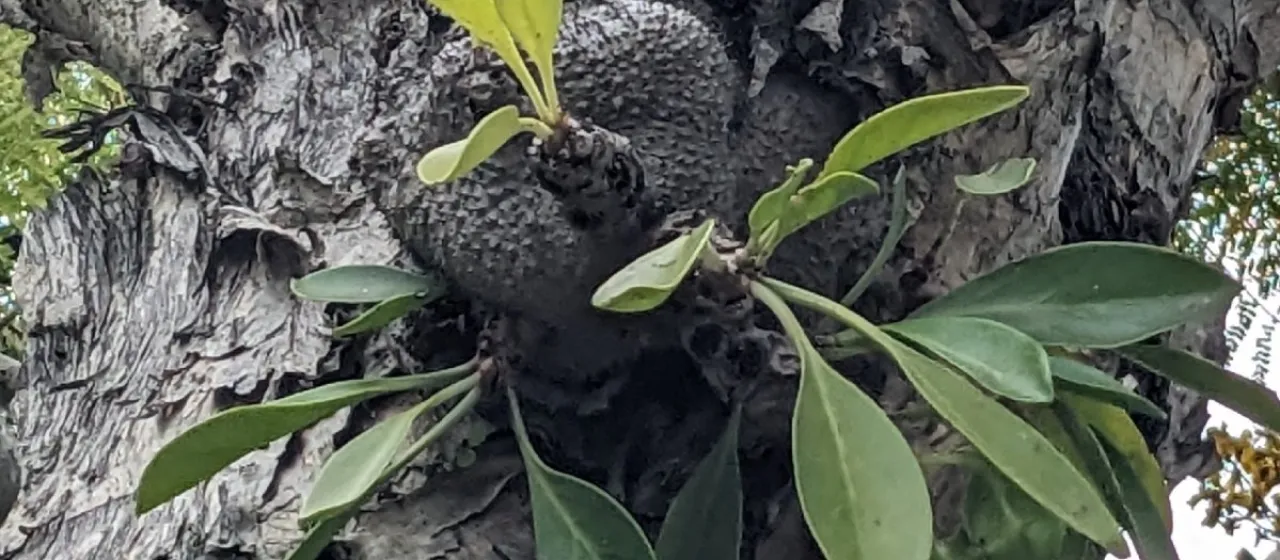
Myrmecodia beccarii is a remarkable member of the Rubiaceae family, widely recognized in the botanical community as an ant-plant or myrmecophyte. This plant has developed a specialized symbiotic relationship with ants, which inhabit the complex network of cavities within its enlarged, tuberous stem known as the caudex.
Originating from the tropical rainforests and mangrove swamps of Northern Queensland, Australia, this species thrives in humid, warm environments. As an epiphyte, it typically anchors itself to tree trunks and branches. Its evolutionary development is highly adapted to the nutrient-poor conditions of its natural canopy habitat, where it relies on debris and ant colonies for nutrition.
Botanically, the plant is characterized by a thick, prickly caudex and a crown of thick, leathery leaves. The stem's internal chambers provide a home for ant colonies, and in return, the plant gains nutrients from the waste products left by the ants. This biological adaptation makes it a standout specimen for specialized botanical collections and greenhouses.
Cultivation requires replicating its natural tropical climate. Growers should maintain consistent temperatures, ideally between 20°C and 30°C, and high humidity levels. The substrate must be highly porous and well-draining, such as a mix of orchid bark, perlite, and sphagnum moss. Watering should be meticulous, allowing the medium to dry slightly between sessions to prevent rot.
The primary use of Myrmecodia beccarii is in the trade of rare exotic plants for botanical gardens and private enthusiasts. Key management challenges include:
- High susceptibility to stem rot if drainage is inadequate or humidity is excessive.
- Infestations of common greenhouse pests like mealybugs and spider mites.
- Strict light requirements; the plant needs bright, indirect light but can suffer from leaf scorching if exposed to intense, direct tropical sun.