
Description
Mystroxylon aethiopicum is an evergreen tree or shrub belonging to the Celastraceae family. Often referred to as the Kooboo-berry, this plant is valued for its hardiness, attractive foliage, and its contribution to environmental stability in its native habitats.
The species is indigenous to Africa, with a distribution range extending from Ethiopia down to South Africa. It thrives in diverse ecological zones, including lowland forests, thickets, and mountain slopes. Its native adaptability suggests high potential for agroforestry projects in regions with tropical and subtropical climates.
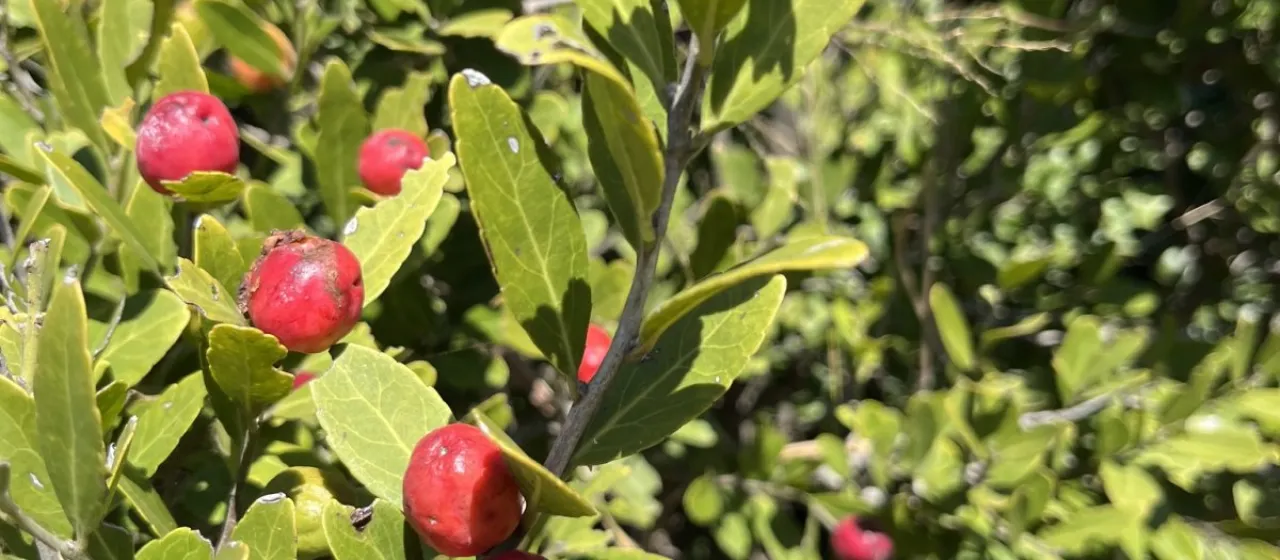
Botanically, it typically forms a dense crown with leathery, elliptic leaves. The tree produces small, yellowish-green flowers, followed by decorative, edible-looking drupes that change from yellow to deep red. These fruits are a vital food source for various bird species, playing a key role in local ecological cycles.
Cultivation requirements focus on well-drained soil and adequate sun exposure. While the plant is notably drought-tolerant once established, it prefers consistent moisture during its juvenile growth stage. It can adapt to a wide range of soil types, provided they are not waterlogged, making it a low-maintenance choice for many regions.
- Utilized for high-quality timber in small-scale carpentry.
- Used extensively in ornamental landscaping and hedge creation.
- Supports local bird populations and promotes biodiversity.
- Valued in traditional medicinal practices within local communities.
When it comes to pests and diseases, the tree is generally robust. However, it can be susceptible to scale insects and powdery mildew, especially in areas with poor air circulation or excessive humidity. Maintaining regular pruning and monitoring the foliage density is usually sufficient to ensure the tree remains healthy and productive.