
Description
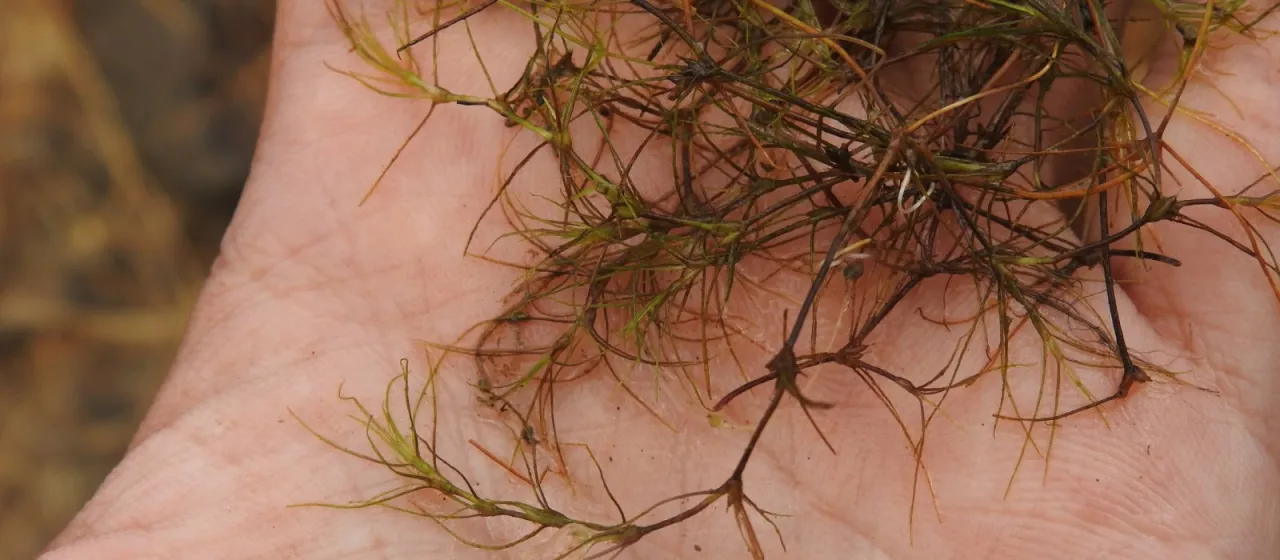
The slender naiad (Najas gracillima) is a submerged annual aquatic plant belonging to the Hydrocharitaceae family. It is recognized by its delicate, thread-like stems and slender leaves arranged in whorls. This species is often overlooked but plays a significant role in maintaining the health and biodiversity of freshwater ecosystems.
The plant is native to parts of North America and has been observed in various freshwater habitats, including ponds, lakes, and slow-moving streams. Its distribution depends heavily on water clarity and the quality of the sediment, as it prefers nutrient-rich, silty or sandy substrates for proper root development. The species is highly adaptable to various light conditions within the water column.
Botanically, Najas gracillima is characterized by its inconspicuous, unisexual flowers that are pollinated underwater. The plant propagates primarily through seeds that are highly buoyant, allowing them to drift to new locations. This reproductive strategy ensures that the population can persist and expand throughout the growing season, provided that water temperatures remain suitable for growth.
From an agricultural and management perspective, this plant is not typically farmed commercially, though it is sometimes studied in the context of wetland restoration. It requires no formal agricultural intervention, but its growth must be monitored in managed ponds. Key environmental requirements include:
- Water depth: 0.5 to 2 meters.
- Sediment type: Organic-rich silt or clay.
- Light exposure: Partial to full sun penetration.
- Water chemistry: Tolerance to neutral to slightly alkaline pH levels.
Economically, the slender naiad is valued for its capacity to provide refuge for small aquatic organisms and as a source of biomass in natural water purification processes. However, it can become a nuisance if it grows too densely, impacting recreational use of water bodies. Common pests include herbivorous aquatic insects and snails, while diseases are typically limited to opportunistic fungal or bacterial infections that occur under conditions of environmental stress.