Cynometra cauliflora
Cynometra cauliflora L.
Description
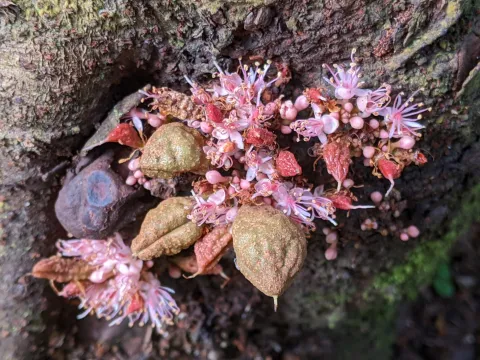
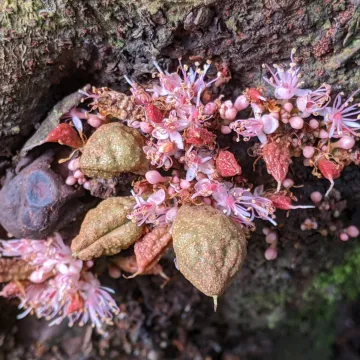
Cynometra cauliflora, commonly known as Nam-nam, is a tropical fruit-bearing tree belonging to the family Fabaceae. This tree is scientifically notable for its cauliflory, a botanical phenomenon where flowers and fruits emerge directly from the trunk and woody branches, rather than from new shoots, which is a common adaptation in rainforest environments.
The species is native to Southeast Asia, particularly Malaysia and Indonesia. It thrives in humid, tropical lowland forests. Over centuries, it has been introduced to other tropical regions globally, including parts of India and Sri Lanka, where it is grown primarily in home gardens and small-scale agroforestry systems for its unique edible properties.
Botanically, the plant is a small to medium-sized evergreen tree. Its leaves are compound, often featuring leaflets that are leathery and glossy. The fruit itself is a distinctive, kidney-shaped or crescent-shaped pod with a fleshy, fibrous interior. The fruit is typically harvested when it turns from light green to a yellowish or brownish hue, signaling maturity.
Cultivation requires a frost-free environment with high humidity and consistent rainfall. The ideal soil for this species is deep, well-draining, and rich in organic matter. As an understory plant, it can tolerate partial shade, though fruit production is generally higher when the tree receives filtered sunlight. Propagation is typically done via seeds, requiring care to maintain viability after harvest.
The fruit of the Nam-nam is valued for its versatility in regional cuisines. Because of its tart and acidic profile, it is rarely eaten raw as a dessert fruit, but rather as a culinary ingredient.
- Processed into spicy sambals and savory side dishes.
- Used as an ingredient in traditional pickles and preserves.
- Cooked with sugar to create sweet-and-sour jellies.
- The bark and leaves are occasionally used in traditional medicine applications.
Photo gallery