
Description
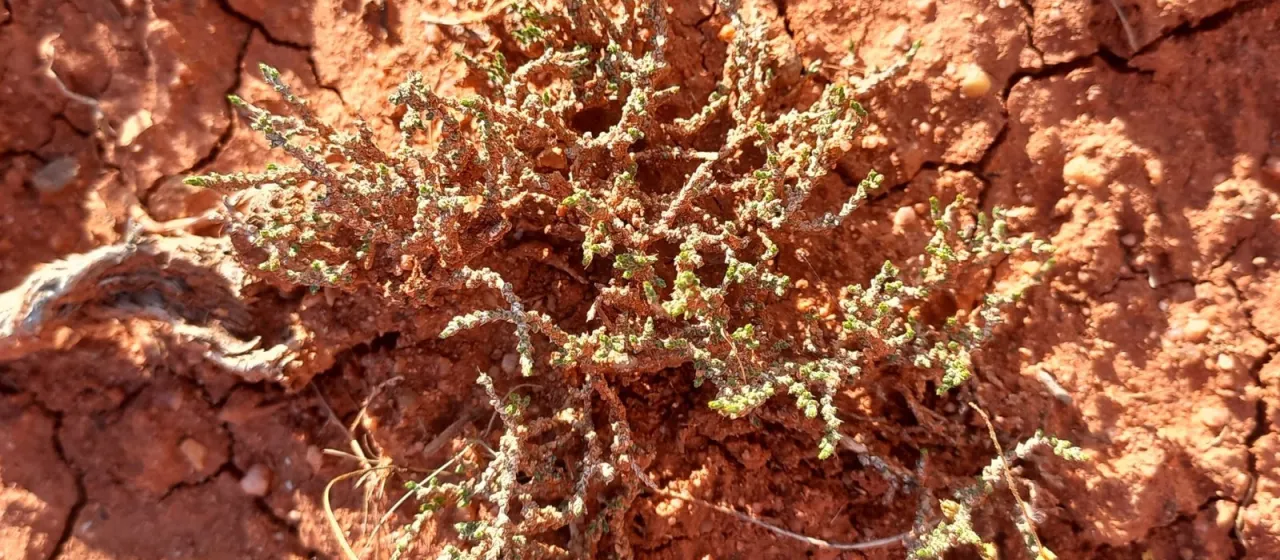
Nanophyton erinaceum is a perennial subshrub belonging to the Amaranthaceae family. It is a cushion-forming plant characterized by its dense, compact growth habit, which allows it to thrive in the harsh climatic conditions of arid environments. It is highly valued as a resilient desert shrub with unique ecological adaptations.
The native range of this species covers the desert and semi-desert regions of Central Asia, Kazakhstan, and Mongolia. It is specifically adapted to rocky, gravelly, and saline soils. As a halophyte, it can withstand high soil salinity, making it a dominant vegetation type on salt-affected plains and mountain slopes in its geographical distribution area.
Botanically, Nanophyton erinaceum is distinguished by its woody stems and small, scale-like leaves that are pressed close to the stem to minimize water loss. Its root system is exceptionally deep and extensive, enabling it to access moisture trapped in rocky crevices, which is vital for survival during prolonged droughts and high heat stress typical of the desert climate.
In terms of economic utility, it serves as a crucial forage resource for livestock, particularly camels, sheep, and goats. It remains highly palatable even during the winter months, providing essential nutrients when other forage species are scarce. This makes it an invaluable asset for pastoralists who rely on natural rangelands for their animal husbandry operations.
The crop does not face significant pest pressure under natural conditions, though its population can be affected by intensive overgrazing and soil erosion. Agricultural management focuses on sustainable rangeland utilization rather than conventional cultivation. Proper grazing rotation is key to preserving these ecosystems, ensuring that the plant can continue to provide ecological and forage benefits in fragile desert habitats.