
Description
Bog asphodel (Narthecium ossifragum) is a rhizomatous perennial herb belonging to the Nartheciaceae family. Historically linked to the lily family, it is now classified within its own taxonomic group, thriving in the nutrient-poor, acidic, and waterlogged soils common throughout Western and Northern Europe.
The plant is native to bogs, moorlands, and damp heathlands. In terms of agronomy, its presence is a diagnostic indicator. Farmers recognize it as a sign of poorly drained, acidic land that typically lacks the necessary nutrient profile for productive agricultural cultivation or high-quality forage production.
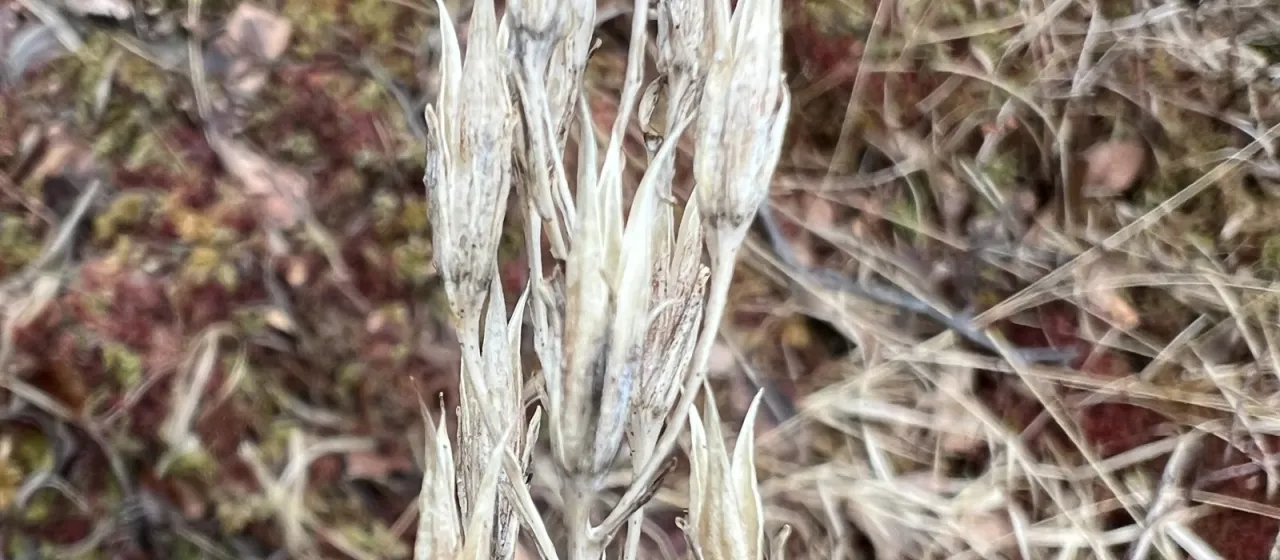
Botanically, it features a rosette of iris-like basal leaves and an upright raceme of bright yellow, star-shaped flowers that bloom in mid-summer. It produces small, numerous seeds contained in capsules. The root system is shallow, reflecting its reliance on the moisture found in boggy surfaces, which makes it highly sensitive to drainage operations.
There is no standard agrotechnology for cultivating this species, as it is generally considered a weed or a problematic plant in pastoral settings. Agricultural management focuses on soil improvement strategies such as lime application and intensive drainage, which naturally eliminate the plant's favorable habitat and promote the growth of desirable forage grasses.
The main agricultural concern associated with Narthecium ossifragum is its toxicity to livestock, particularly sheep. It contains steroidal saponins that cause a condition known as "alveld," characterized by severe photosensitivity, liver damage, and skin lesions. Because it is a wild species, it suffers from few pests, instead maintaining its dominance through physiological adaptations to its challenging environment.