
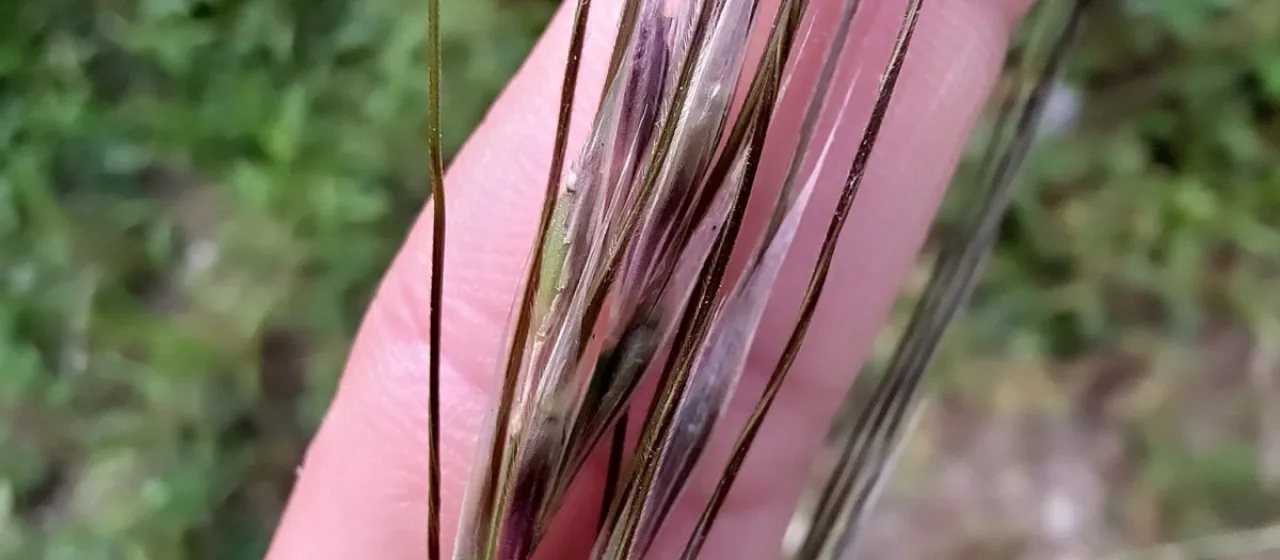
Description
Chilean needle grass (Nassella neesiana) is a perennial grass species belonging to the Poaceae family. While it is native to parts of South America, it is widely recognized in modern agriculture as a significant weed species that invades grazing lands, outcompeting desirable forage crops and negatively impacting livestock production.
The plant originates from South American countries including Argentina, Chile, and Uruguay. In these native areas, it forms part of the grassland ecosystem. However, its introduction to countries like Australia, New Zealand, and parts of North America has caused ecological challenges due to its ability to colonize diverse landscapes, from undisturbed native bushland to improved pastures.
Botanically, it is characterized by its tussock-forming habit and narrow, harsh leaves that grow up to 100 cm in height. The most distinct feature is the inflorescence, which produces sharp, awned seeds capable of self-burying into the soil or becoming entangled in livestock fleece. This survival mechanism ensures high reproductive success and dispersal.
Regarding cultivation and environmental requirements, the species thrives in temperate climates and is highly adaptable to various soil types, including shallow, rocky, or nutrient-poor soils. It is drought-tolerant, which makes it particularly resilient. Standard management practices for agricultural land include rotational grazing during the early growth stage, intensive mowing, and the application of targeted herbicides during the active growing season.
Economically, the species is considered a pest rather than a crop. The presence of sharp seeds can severely damage the quality of wool and irritate livestock hides and eyes, leading to economic losses. The plant exhibits high resistance to many common pests and diseases. Farmers often observe these patterns:
- Increased competition with native grasses
- Damage to livestock wool quality
- Difficulty in chemical control
- High drought resistance