
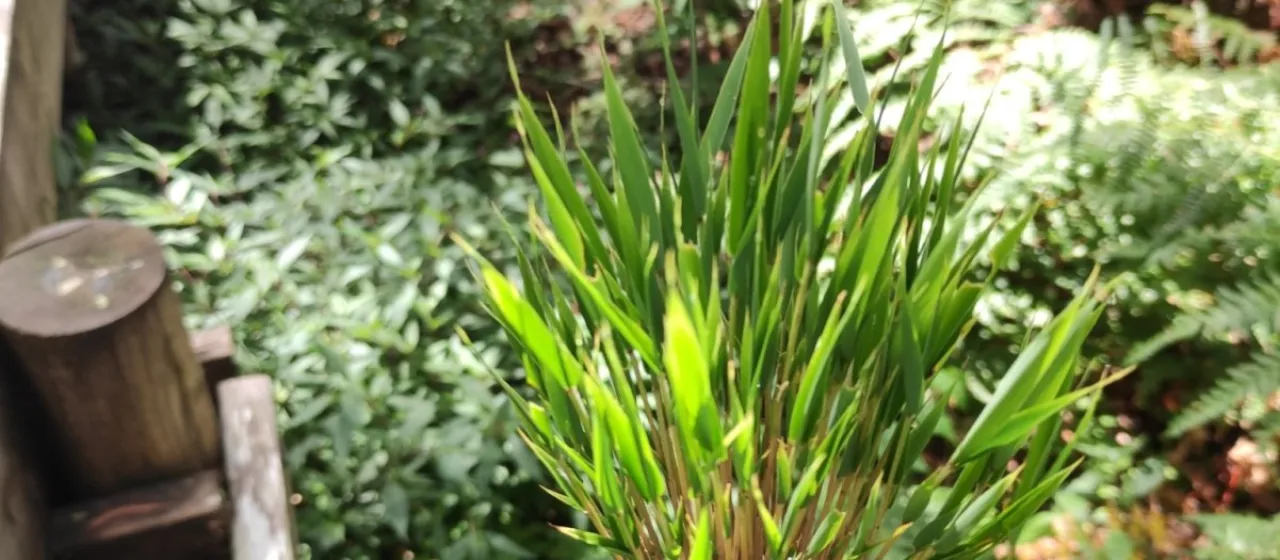
Description
Nastus borbonicus is a perennial woody plant belonging to the Poaceae family and the Bambusoideae subfamily. This species is a unique type of bamboo characterized by its hollow stems and graceful foliage, naturally forming dense clumps. Native to high-altitude tropical ecosystems, it is particularly noted for its specialized ecological niche, which defines its distinct morphological and physiological development.
The plant originates from Reunion Island in the Indian Ocean, where it is found in humid, high-altitude forest zones. Its natural habitat is characterized by high air humidity and relatively cool, stable temperatures. Due to these specific environmental demands, Nastus borbonicus is rarely cultivated outside its native climate unless strictly controlled conditions in greenhouses or botanical gardens are provided.
Botanically, Nastus borbonicus possesses lignified culms, a vigorous rhizome system, and narrow lanceolate leaves. It is highly efficient at photosynthesizing in the low-light conditions often found under the dense canopy of tropical forests. Flowering is sporadic, occurring rarely in the wild or in cultivation, which makes studying its genetic propagation a significant challenge for botanists and horticulturists.
Agronomic requirements for this species include maintaining high soil moisture levels without causing waterlogging, which can lead to root rot. It thrives best in loose, organic-rich, slightly acidic soils, reflecting its native volcanic mountain substrate. Proper maintenance involves regular watering, consistent mulching to protect roots from temperature fluctuations, and providing shelter from harsh, direct sunlight during the peak of the growing season.
The хозяйственное (economic) utility of Nastus borbonicus is largely focused on niche applications, including:
- Landscaping in subtropical gardens for aesthetic appeal.
- Ecological restoration of mountain slopes to prevent soil erosion.
- Botanical research on cold-hardy tropical flora and mountain forest biodiversity.
- Small-scale ornamental use in conservatory environments.
Common pests and diseases affecting this plant in cultivation include fungal infections, particularly root rot triggered by improper drainage, and common greenhouse pests like spider mites or mealybugs. Effective management requires constant monitoring of humidity levels, ensuring good air circulation, and the judicious use of organic treatments to keep the bamboo healthy and vigorous throughout its life cycle.