
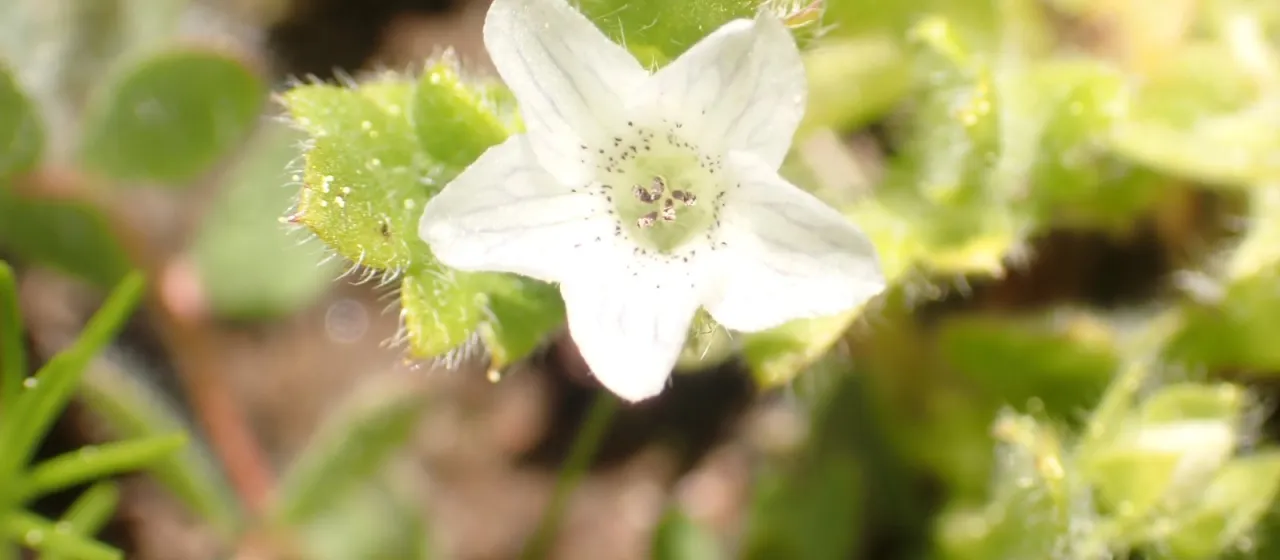
Description
Nemophila spatulata is an annual herbaceous plant belonging to the Boraginaceae family. This species is recognized for its unique spatulate foliage and compact growth habit, making it a valued addition to specialized rock gardens and ornamental flower beds. As a member of a diverse family, it shares typical characteristics such as distinctive floral structure and moderate water requirements.
The plant is native to the western regions of North America, where it thrives in temperate climatic conditions. It is typically found in open meadows or mountain slopes where the soil is porous and well-drained. This adaptation allows the species to flourish during the cool, moist months of spring, setting seed before the intense heat of summer begins.
Botanically, Nemophila spatulata displays a branched stem structure and characteristic spoon-shaped leaves. The flowers are delicate and hold significant aesthetic appeal, often serving as a focal point in low-growing plant arrangements. The root system is relatively shallow, which necessitates consistent but light moisture levels to maintain plant health throughout its active growth phase.
Agricultural and horticultural practices for this species require a sunny to partially shaded location with loose, nutrient-rich soil. Proper spacing is crucial to prevent the spread of fungal diseases, as this plant requires good air circulation. Seeds should be sown early in the season, as the plant prefers cooler temperatures to establish its vegetative structure.
Regarding health and maintenance, the primary threats include root rot due to poor soil drainage and infestation by pests such as aphids or slugs. Consistent monitoring during the early stages of growth is recommended to ensure high-quality flowering. With proper care, this plant serves as an excellent ground cover that enhances the visual diversity of any garden ecosystem.