
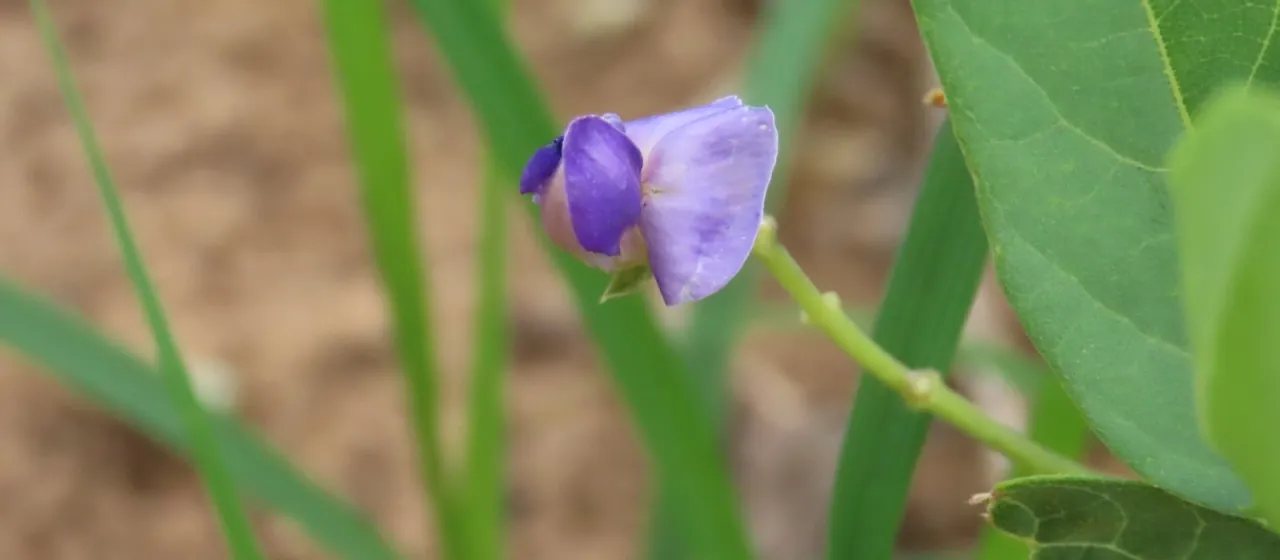
Description
Neorautanenia mitis is a perennial herbaceous plant belonging to the Fabaceae (legume) family. The species is highly distinctive due to its ability to produce large, tuberous root systems, which act as a vital energy reservoir, allowing the plant to withstand extended periods of drought and environmental stress.
Originating from the tropical regions of Africa, this plant is primarily found across Southern and Eastern African landscapes. It is typically associated with savanna biomes, open grasslands, and light woodlands. Its natural range is defined by warm climates where the plant leverages high solar radiation for its development during the wet season.
Botanically, the plant features trifoliate leaves and characteristic papilionaceous flowers typical of its family. The stems can be prostrate or climbing, depending on the availability of support. The fruit is a pod containing several seeds, which are highly resilient. Its ability to host nitrogen-fixing bacteria in its root system enhances soil fertility in its native habitat.
Cultivation requirements involve specific soil conditions, prioritizing well-drained, sandy, or loamy substrates. The plant is sensitive to waterlogging, which poses a significant risk to the tuberous roots. Effective agrotechnology requires clear spacing to minimize competition for light and water, and the management of soil aeration to promote vigorous tuber formation.
- Soil Type: Well-drained sandy loam.
- Temperature: Prefers warm, tropical climates.
- Growth Cycle: Seasonal, adapted to rainfall patterns.
In terms of agricultural and practical application, Neorautanenia mitis is recognized for its potential in ethnobotanical studies. Research is focused on the chemical composition of its tubers, which exhibit properties useful for botanical insecticides and fungicides. Common agricultural pests include soil-borne larvae and fungal pathogens that affect the tubers during periods of high humidity or poor drainage.