
Description
Colusa grass (Neostapfia colusana) is a rare annual grass belonging to the Poaceae family. This species is highly specialized and is endemic to the vernal pool ecosystems of California's Central Valley, making it a subject of significant botanical interest and conservation concern.
The plant is native to specific wetland areas in California that undergo a cycle of seasonal inundation followed by intense desiccation. Unlike conventional agricultural crops, Colusa grass has evolved to thrive in these volatile environments, where it completes its lifecycle in response to the availability of water in shallow seasonal ponds.
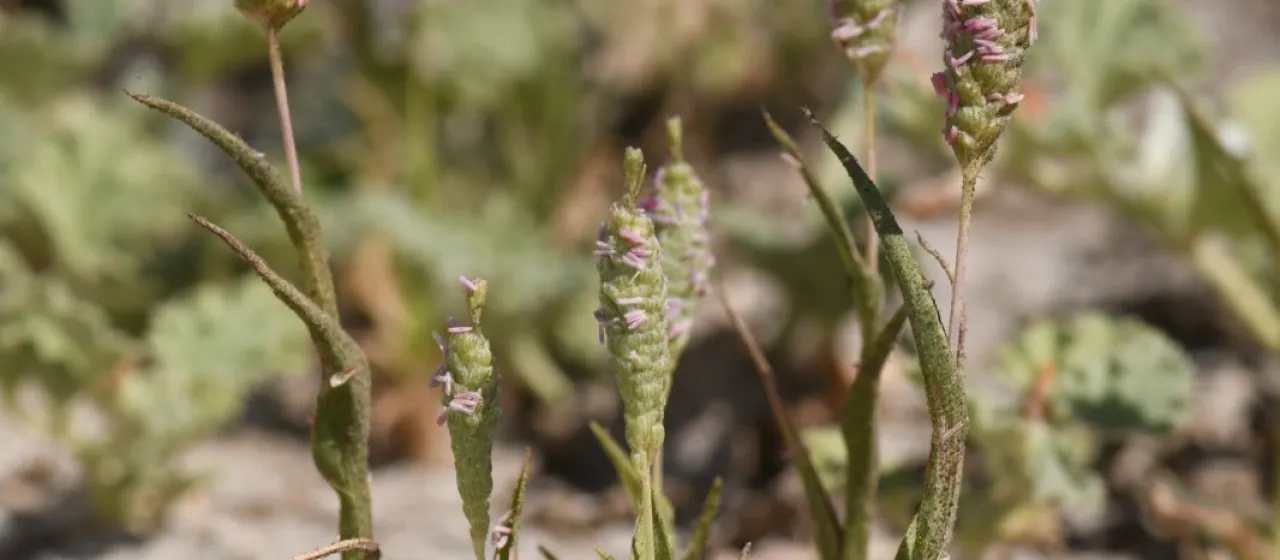
Botanically, this grass is distinguished by its glandular foliage, which emits a strong, unique scent. Its structure is adapted to waterlogging during the early growth stages, and it features a compact, spike-like inflorescence. The plant relies on specific physiological mechanisms to tolerate high salinity and dramatic moisture fluctuations in the soil.
Regarding soil and climatic requirements, the plant is strictly confined to heavy clay soils that are capable of ponding water. It requires full sunlight and high temperatures during the summer maturation phase. In terms of cultivation, there is no standardized agricultural practice, as the focus remains entirely on habitat preservation and scientific monitoring of the few remaining wild populations.
The primary utility of this plant is found in ecological research and the preservation of rare germplasm. Because it is an endangered species, it is not grown for feed or industrial usage. Typical pests and diseases are essentially undocumented in an agricultural context, as the species is not subjected to intensive farming practices that might introduce or concentrate pathogens.