
Description
Neotorularia torulosa is an annual herbaceous plant belonging to the Brassicaceae family. While primarily categorized as a wild plant or a weed in agricultural landscapes, it represents a significant genus within the mustard family, sharing morphological characteristics with other oilseed crops. Its ability to thrive in harsh, nutrient-poor conditions makes it a subject of interest for ecological studies.
The origin of this species is traced back to the arid and semi-arid regions of Central and Western Asia, as well as parts of Eastern Europe. It is well-adapted to steppe climates characterized by low precipitation and high temperature fluctuations. In agricultural settings, it typically emerges in fallow fields, along the margins of arable land, and within winter cereal crops, often flourishing where soil disturbance has occurred.
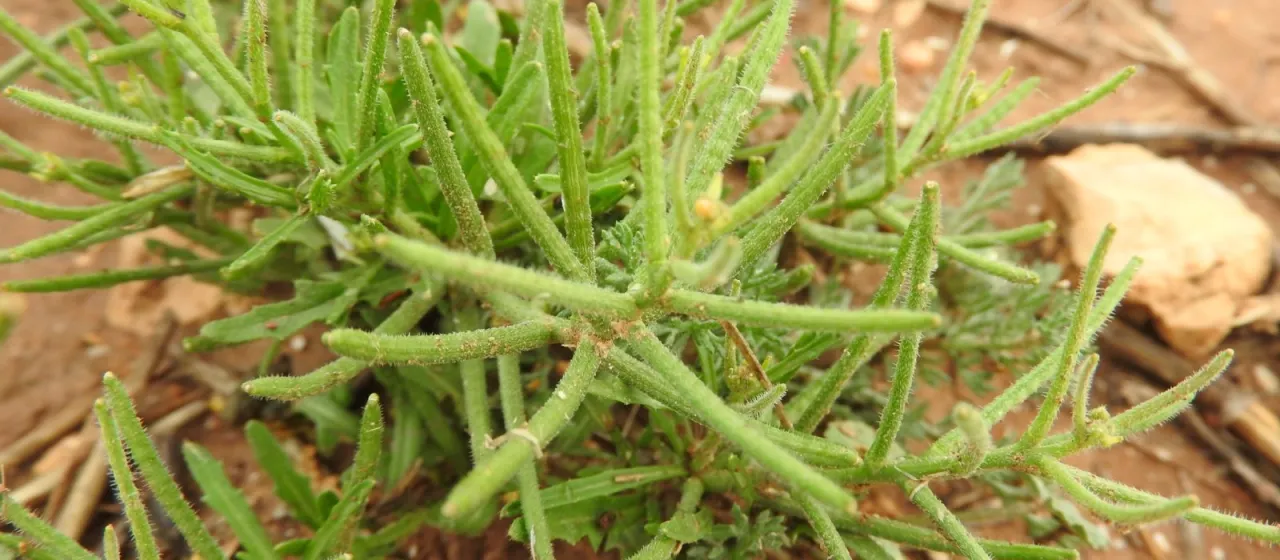
Botanically, the plant develops an erect stem ranging from 10 to 40 cm in height, typically covered in fine trichomes. The leaves are generally lobed or pinnate, providing a distinct appearance. The inflorescence consists of small, cruciform flowers with four yellow or pale petals. The fruit is a long, narrow, torulose (beaded) silique, which contains numerous small seeds dispersed by wind and mechanical action.
In terms of agricultural requirements, Neotorularia torulosa prefers well-drained, sandy or loamy soils with a basic pH. It is highly drought-tolerant and thrives in full sun, making it particularly difficult to manage in dryland farming systems. Successful management requires integrated weed control practices, including appropriate crop rotation, competitive planting, and timely mechanical cultivation to prevent the plant from reaching the seed-set stage.
The economic impact of this plant is generally considered negative for commercial agriculture, although it serves as an ecological component of arid ecosystems. The primary concerns and uses include:
- Competition with cultivated crops for moisture, soil nitrogen, and sunlight.
- Potential to serve as a reservoir for pests and pathogens affecting brassica crops.
- Limited value as early-season grazing forage for livestock in steppe regions.
- Research interest in its drought-resistance genes for potential breeding of hardy oilseed crops.