
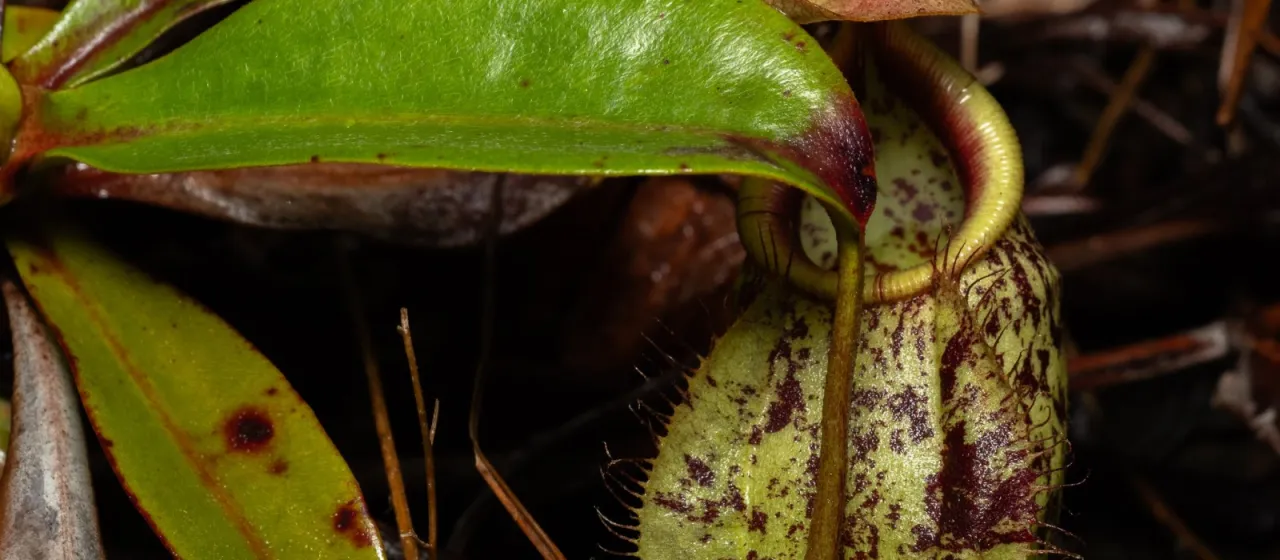
Description
Nepenthes hookeriana is a naturally occurring hybrid between Nepenthes ampullaria and Nepenthes rafflesiana, belonging to the Nepenthaceae family. This carnivorous plant is highly valued for its striking, colorful pitchers that serve as specialized traps to supplement its nutrient intake in poor, acidic soils.
The plant originates from the tropical rainforests and peat swamps of Southeast Asia, specifically Borneo and Sumatra. Because of its native environment, it is classified as a lowland species, meaning it requires high temperatures and constant humidity throughout its life cycle to flourish and produce healthy traps.
Botanically, it is an epiphyte with climbing vines and lanceolate leaves. The most distinct feature is the pitchers, which range from bright green to deep red, often spotted with maroon patterns. Inside these structures, the plant produces digestive enzymes that break down trapped insects, allowing it to survive in habitats where standard nutrients are largely unavailable.
Successful cultivation of Nepenthes hookeriana requires a specialized approach to growing conditions. It thrives in an open, airy, and acidic substrate composed primarily of long-fiber sphagnum moss and perlite. A temperature range between 22°C and 28°C, paired with a relative humidity level of at least 75%, is essential. Irrigation must strictly involve distilled or demineralized water to prevent the accumulation of minerals that can kill the plant.
The primary use of this species is in horticulture and botanical collections, where enthusiasts seek to showcase its unique trapping mechanism. Managing the plant's health requires attention to the following aspects:
- Proper air circulation to prevent mold and bacterial growth on the pitchers.
- Regular monitoring for pests such as mealybugs and aphids, which can damage the tender foliage.
- Maintaining stable lighting conditions; while it needs bright light, intense direct sun can scorch the leaves and inhibit pitcher development.