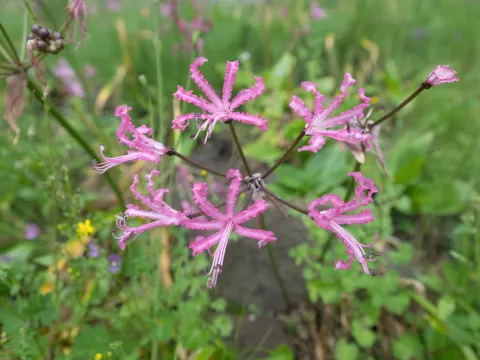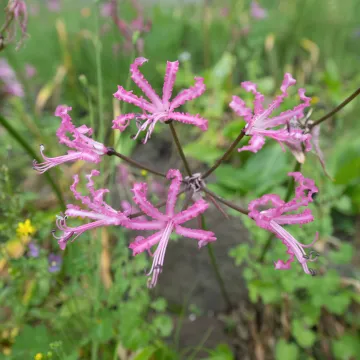
Nerine bowdenii
Nerine bowdenii x Nerine sarniensis
Description
Nerine bowdenii is a perennial bulbous plant belonging to the Amaryllidaceae family. This ornamental crop is widely recognized for its vibrant, spider-like flower clusters that emerge late in the growing season, often creating a splash of color when other garden plants have already faded.
Native to the mountains of South Africa, this species thrives in climates characterized by distinct dry and wet seasons. In commercial production, it is cultivated primarily in mild temperate regions, greenhouses, or as a container plant to protect the bulbs from freezing temperatures during dormancy.
Botanically, the plant develops a pear-shaped bulb that should be planted with its neck exposed above the soil surface. The foliage is strap-shaped and typically dies back before the flower spike emerges, which can reach heights of 45 to 60 cm. The flowers are notable for their reflexed petals, giving them an elegant and airy appearance.
Successful cultivation requires well-draining, nutrient-rich soil with a neutral to slightly acidic pH. The plant demands a sunny position and consistent watering during the growing phase. A critical aspect of the lifecycle is the summer dormant period, where bulbs must remain dry and warm to initiate the flowering process for the following year.
- Ensuring excellent soil drainage to prevent bulb rot.
- Providing adequate sunlight throughout the vegetative phase.
- Limiting disturbances to the root system through minimal repotting.
- Applying a balanced fertilizer during the leaf-development stage.
The economic use of Nerine bowdenii spans across professional floristry and landscape design. It is highly valued as a premium cut flower due to its long vase life, making it a sought-after commodity in international floral markets during the autumn months.
Common phytosanitary issues include fungal infections such as botrytis and soft rot, which are often consequences of improper irrigation practices. Pests like mealybugs and spider mites may also affect plant vigor. Maintaining strict hygiene and monitoring moisture levels are essential strategies for sustainable production.
Photo gallery