
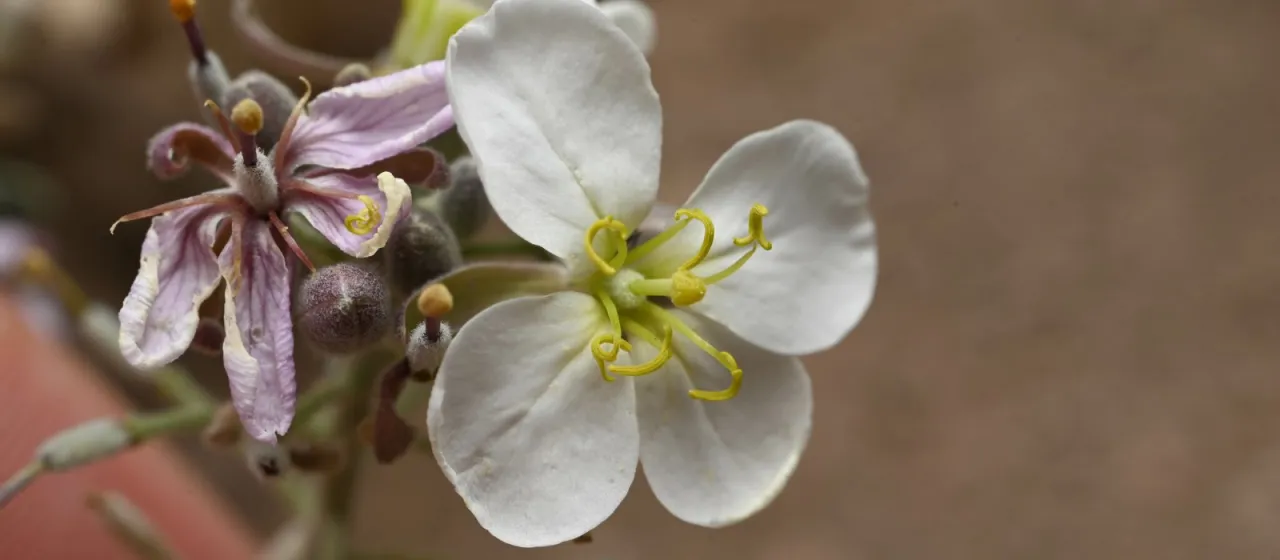
Description
Nerisyrenia camporum is a perennial herbaceous plant belonging to the Brassicaceae family. Recognized for its resilience in arid environments, this species is of particular interest to researchers studying crop adaptation in water-limited conditions. Its ability to thrive in challenging landscapes marks it as a candidate for specialized agricultural and conservation purposes.
The native range of this species is located in the semi-arid zones of North America, including parts of the southwestern United States and northern Mexico. These environments are characterized by high diurnal temperature fluctuations and low annual rainfall. Through evolutionary adaptation, the plant has developed survival mechanisms that allow it to maintain metabolic functions despite limited water availability.
Botanically, Nerisyrenia camporum features a robust taproot system that aids in stabilizing soil and accessing deeper moisture reserves. The foliage is often adapted to reduce transpiration, and the inflorescences provide a steady supply of nectar, acting as an attractant for various pollinators. These features make it a significant plant for maintaining local ecosystems.
Regarding climate and soil requirements, the plant thrives in well-drained, sandy, or rocky substrates. It requires high solar radiation and is intolerant of compacted or waterlogged soils. In a cultivation setting, mimicking these natural conditions is essential for success. Providing a neutral to alkaline soil profile generally yields the best growth results.
The agricultural and ecological uses for this plant include:
- Soil stabilization and erosion control in arid climates.
- Support for native pollinator populations.
- Use in xeriscaping and sustainable landscaping projects.
- Genomic resource for future drought-resistance breeding programs.
Common pests and diseases include those typical for Brassicaceae, such as cruciferous flea beetles and various fungal pathogens associated with root rot. Effective management requires prioritizing soil drainage and monitoring during humid intervals, which can significantly reduce the risk of infection. With proper care, the plant demonstrates excellent survival rates.