
Description
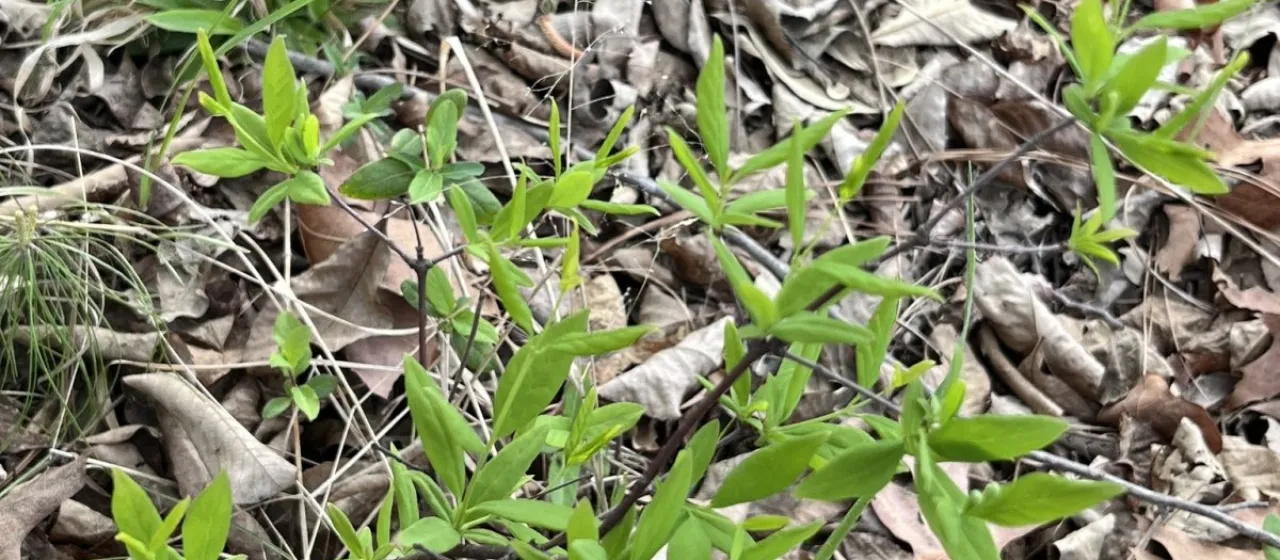
Nestronia umbellulata, commonly known as the nestronia, is a perennial shrub belonging to the Santalaceae family. As a hemiparasitic plant, it possesses a specialized root system capable of forming haustoria, which allow it to extract water and essential nutrients from the roots of neighboring woody plants.
This species is native to the southeastern United States. It naturally thrives in moist, well-drained forest soils, often situated near streams or in open wooded areas. Its ecological distribution is tightly linked to the presence of host species, making it a highly selective plant in terms of habitat requirements.
Botanically, it is a deciduous shrub that typically reaches heights between 0.5 and 1 meter. The plant is characterized by simple, opposite leaves and small, inconspicuous greenish-yellow flowers grouped in umbellate inflorescences. These flowers are primarily pollinated by insects, leading to the development of small, drupe-like fruits.
From an agricultural and horticultural perspective, cultivation is exceptionally difficult due to the plant's obligate reliance on hosts. Growing nestronia requires careful selection of companion plants to serve as hosts and specific soil conditions characterized by organic acidity and consistent moisture levels. Standard industrial agronomic practices are not applicable to this species.
The plant is not used commercially, as it remains a rare and protected species in many parts of its range. Potential pests and diseases usually relate to root rots caused by soil pathogens or competitive pressure from aggressive invasive plants that can outcompete the shrub for resources. Conservation efforts are currently the primary focus regarding this species.