
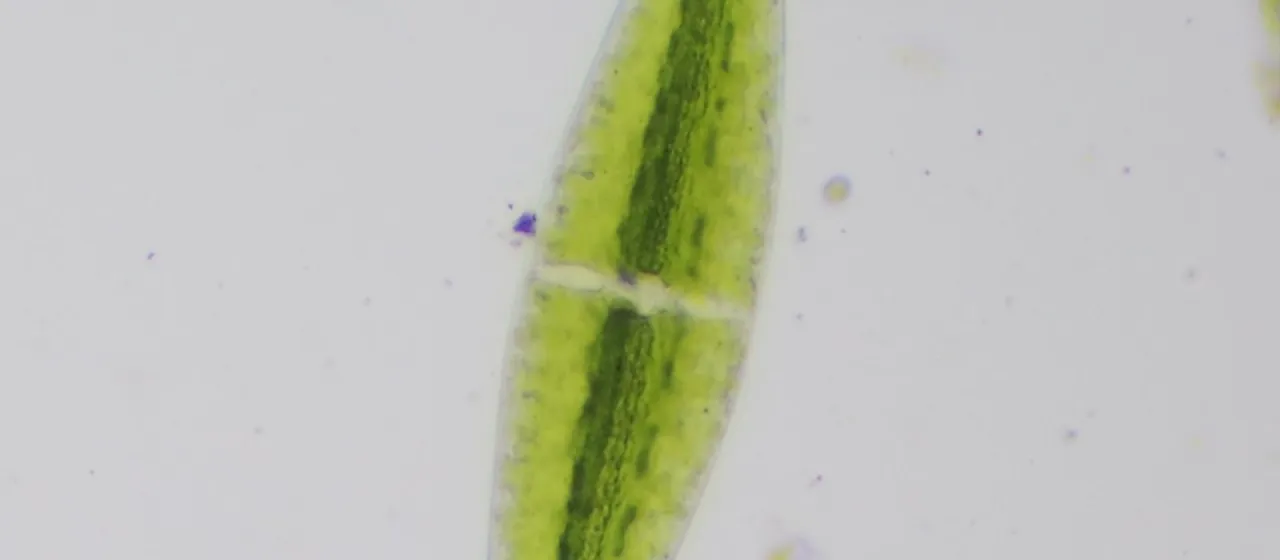
Description
Netrium digitus is a single-celled green alga belonging to the order Zygnematales and the family Mesotaeniaceae. It is widely recognized in phycology for its distinct, elongated, and finger-like cell shape. Unlike more complex algae, Netrium digitus exists as an individual cell, showcasing a straightforward yet highly efficient cellular architecture optimized for life in freshwater habitats.
This organism is found globally, primarily inhabiting stagnant or slow-moving acidic waters such as peat bogs, swampy margins of ponds, and damp soil. While it is not a commercial agricultural crop, it acts as a critical primary producer in natural aquatic ecosystems and is often used as a bioindicator for water quality in ecological studies.
The botanical structure of Netrium digitus is highlighted by its large, elaborate chloroplasts arranged within the cell, which facilitate photosynthesis. The cell wall is typically smooth and transparent, allowing for efficient light absorption. Reproduction is mainly achieved through binary fission or sexual conjugation, resulting in the formation of resistant zygospores that allow the alga to survive harsh environmental conditions.
The requirements for growth are linked to environmental stability. The organism thrives in slightly acidic environments with minimal mineral nutrient enrichment. In an experimental or laboratory setting, researchers maintain these cultures using controlled lighting cycles and temperature regulation, ensuring that the water quality remains free from organic pollutants that might inhibit their metabolic processes.
The practical and scientific applications of Netrium digitus include:
- Utilizing the alga as a sentinel species for measuring water toxicity.
- Fundamental research on the dynamics of photosynthesis in Zygnematales.
- Developing protocols for microalgae cultivation in controlled environments.
Common biological threats to Netrium digitus involve competition with faster-growing filamentous algae or cyanobacteria during episodes of water eutrophication. Furthermore, the population can be significantly reduced by specialized chytrid fungi and microscopic grazers like rotifers, which feed on these cells. Effective management in experimental setups requires strict hygiene to prevent the introduction of these biological stressors.