
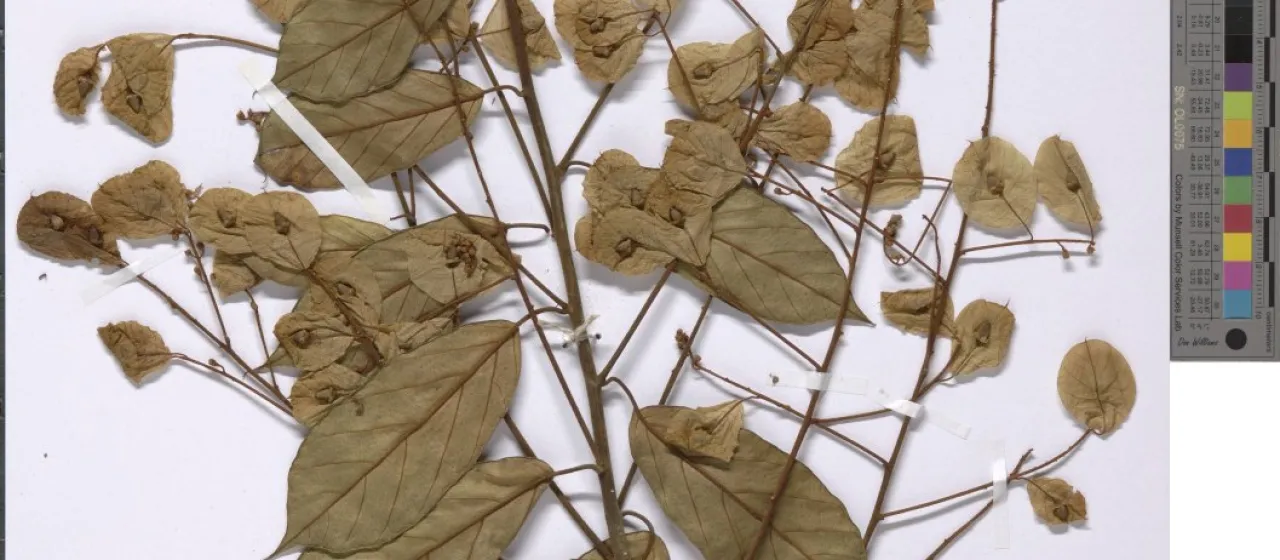
Description
Neuropeltis velutina is a species of woody liana belonging to the Convolvulaceae family. Unlike the majority of its herbaceous relatives commonly found in gardens, this plant develops robust, woody stems capable of reaching the canopy of dense rainforests, functioning as a structural element of the forest ecosystem.
The plant is native to the tropical regions of Southeast Asia, specifically across the Malay Archipelago and adjacent mainland areas. It thrives in primary and secondary rainforests, where it benefits from the high humidity, consistent tropical temperatures, and deep, nutrient-rich soil typical of equatorial forest floors.
Morphologically, Neuropeltis velutina is defined by its characteristic leaves covered in fine, velvet-like hairs, which serve as an adaptation to the high-humidity environment. A distinguishing feature of the genus is the enlargement of the bracts attached to the fruit, which act as dispersal wings, allowing the seeds to be carried by wind across the dense vegetation.
Regarding growth requirements, this species requires a shaded or semi-shaded environment during its early stages, transitioning to brighter light as it climbs. It is not an agricultural crop in the traditional sense; however, it remains a significant subject for ecological research focused on tropical forest restoration and the preservation of endemic botanical species.
While the economic utility of Neuropeltis velutina is not currently linked to large-scale food or fiber production, the Convolvulaceae family is widely recognized for its bioactive properties. Future research into the chemical composition of this specific liana may reveal potential applications in natural product chemistry or sustainable agroforestry practices.
- Family: Convolvulaceae
- Plant Type: Woody Liana
- Native Habitat: Southeast Asian Rainforests
- Key Feature: Velvety foliage and enlarged bracts