
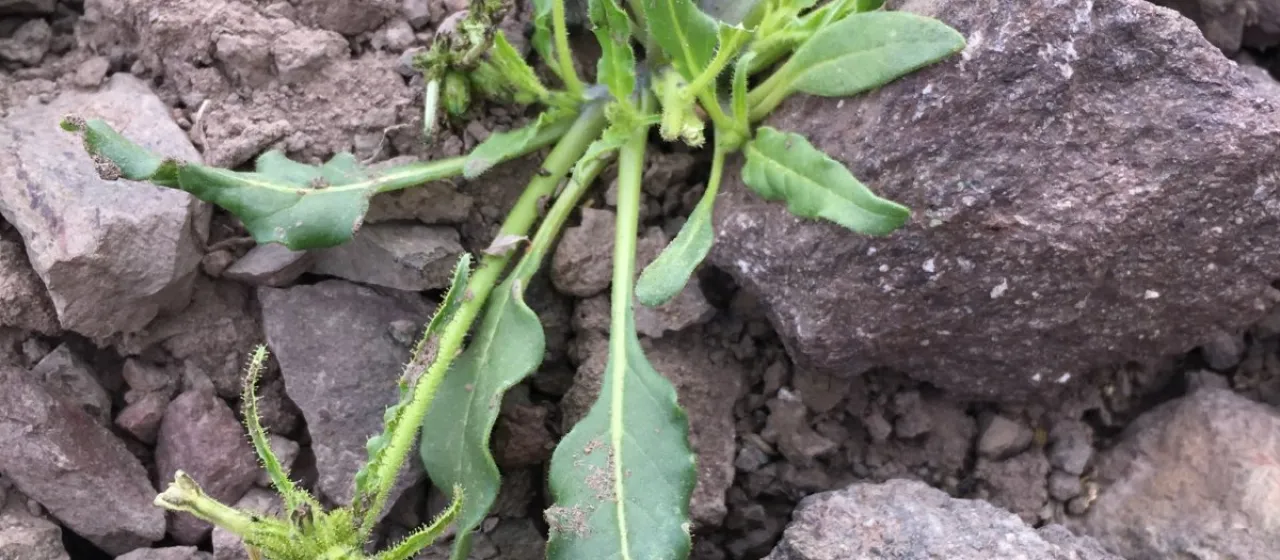
Description
Nicotiana alpina is a distinctive herbaceous perennial plant belonging to the Solanaceae family. Unlike common tobacco varieties, this species has evolved specifically to thrive in high-altitude environments, exhibiting unique physiological traits that allow it to survive in challenging, low-oxygen, and high-UV conditions typical of mountainous regions.
The plant is native to the Andean high-altitude regions, where it colonizes rocky slopes and alpine meadows. The natural distribution is limited to areas with high diurnal temperature variations, forcing the plant to develop efficient mechanisms for heat retention and cold tolerance. Consequently, it remains a rare subject in agricultural practice, typically found in research facilities rather than commercial fields.
Botanically, Nicotiana alpina is characterized by a basal rosette of trichome-covered leaves, which play a crucial role in water retention and protection against high UV exposure. The stem is relatively short compared to lowland tobacco, and the flowers possess the classic tubular structure of the Nicotiana genus, adapted for pollination by high-altitude insects.
Agricultural requirements are quite strict, as the plant is highly sensitive to soil compaction and waterlogging. Success in cultivation depends on providing a mineral-rich, extremely well-draining substrate, such as a mix of grit and sandy loam. Nitrogen-heavy fertilization is generally avoided, as it tends to weaken the plant's structural integrity and increase susceptibility to pests.
- Requirement for porous, rocky soil.
- High tolerance to intense solar radiation.
- Sensitivity to high humidity and root rot.
- Slow growth cycle suitable for cool climates.
The primary economic and scientific value of Nicotiana alpina lies in its genetic diversity. It serves as a valuable resource for breeders looking to introduce cold-hardiness and drought-resistance traits into commercial tobacco hybrids. Beyond research, it is occasionally utilized as a specialty plant for high-elevation rock gardens, provided the environmental conditions are carefully monitored to prevent disease.