
Description
Cleveland's Tobacco (Nicotiana clevelandii) is a herbaceous annual plant species within the Solanaceae family. Unlike its relative, the common tobacco, this species is not cultivated for commercial tobacco production. Instead, it serves as an indispensable tool in plant science, particularly in the fields of virology, plant pathology, and molecular genetics.
The plant is native to the arid regions of the Southwestern United States, specifically parts of California and Arizona, and extends into northern Mexico. It has evolved to thrive in desert-like environments, preferring well-drained, sandy soils and locations that receive full sunlight, demonstrating a remarkable resilience to heat and water scarcity.
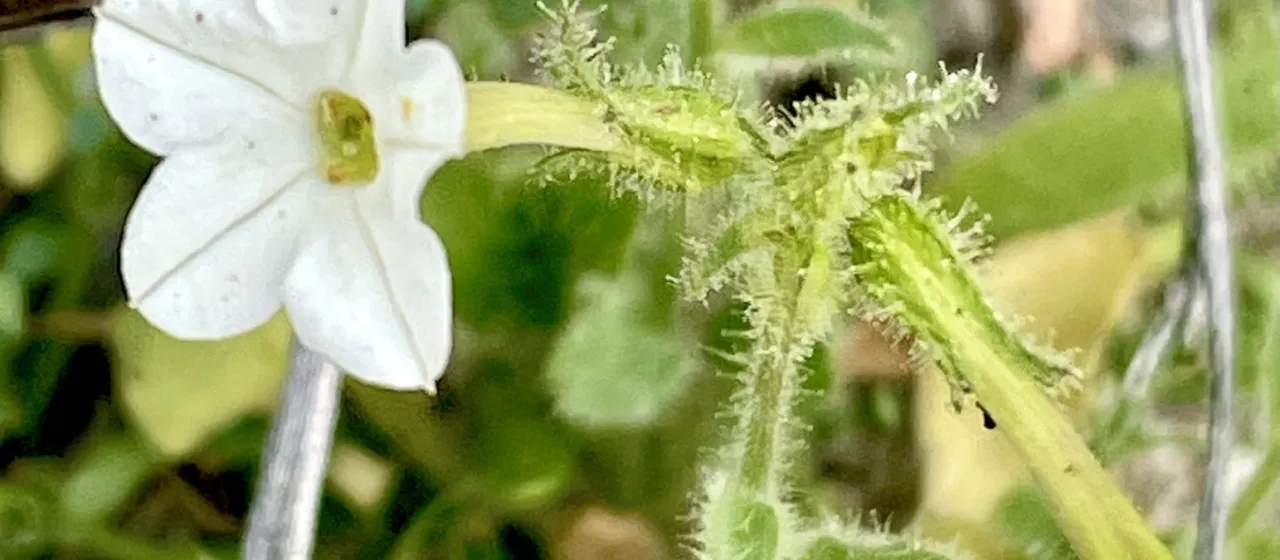
Botanically, the plant is characterized by its glandular-hairy leaves and tubular, white-to-greenish flowers. These morphological features are typical of the genus Nicotiana. It grows to a modest height, making it highly efficient for container cultivation in greenhouse environments where controlled experimental conditions are required for scientific accuracy.
Cultivation requirements involve providing porous soil mixes to ensure excellent aeration and prevent root rot, which is the primary threat to this species in artificial settings. It requires a stable photoperiod and moderate irrigation. While it is hardy in its native habitat, greenhouse-grown plants must be protected from common pests like aphids and whiteflies, which are notorious for transmitting viral diseases that can destroy experimental batches.
The primary utility of Nicotiana clevelandii lies in its exceptional susceptibility to a vast range of plant viruses. Because it reacts clearly to viral infections, it is globally used as a host for virus propagation, testing plant-virus interactions, and developing biotechnological solutions for crop resistance. It is essentially a "sentinel" plant used to screen for and understand viral pathogens affecting major food crops.
- Highly susceptible to numerous plant viruses, aiding diagnostic research.
- Compact growth habit suitable for high-density greenhouse trials.
- Rapid lifecycle, facilitating multiple study cycles in a single year.
- Used extensively in creating and testing transgenic plant resistance.