
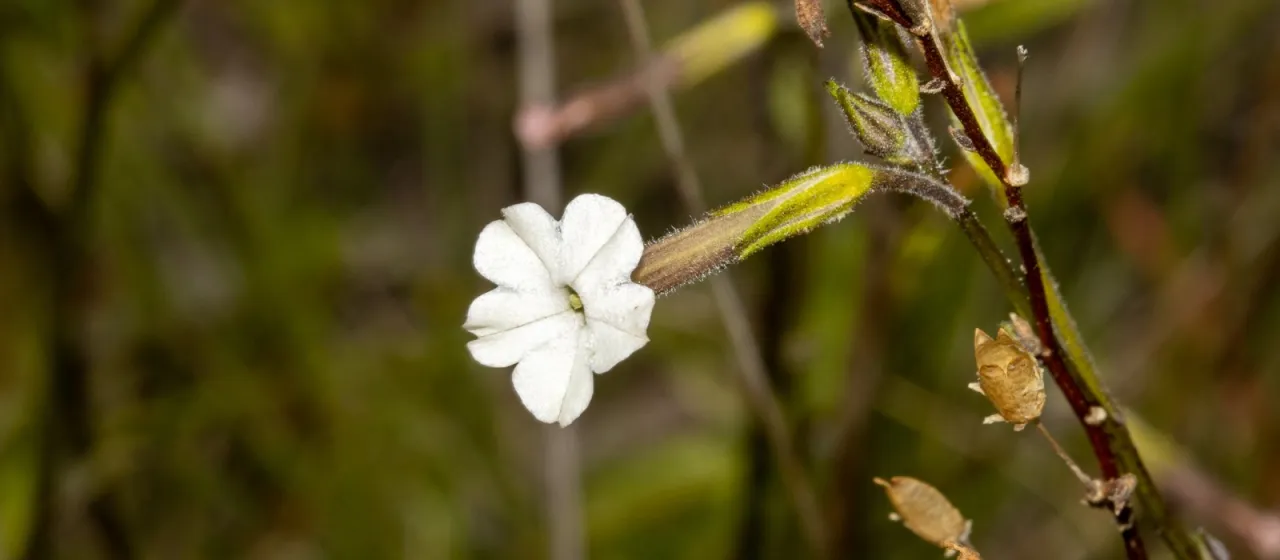
Description
Nicotiana goodspeedii is a plant species belonging to the Solanaceae family. It is a wild relative of cultivated tobacco, known primarily in botanical and genetic studies. As an allotetraploid species, it represents a unique example of natural hybridization within the Nicotiana genus, providing researchers with vital insights into plant evolution and adaptation.
The plant is native to the arid regions of Australia. Its natural habitat consists of dry, rocky soils in environments where water availability is significantly limited. This evolutionary background has equipped the species with robust survival mechanisms that allow it to thrive in harsh, high-temperature climates where many other agricultural crops would fail.
Botanically, this species is characterized by an upright growth habit and glandular, pubescent leaves. The flowers are typically white or pale, showcasing the distinct tubular structure common to the tobacco genus. Its deep taproot system is an essential adaptation, enabling the plant to mine moisture from deeper soil layers during prolonged droughts.
Cultivation requirements focus heavily on soil drainage. It performs best in sandy or gravelly soils with an alkaline or neutral pH. The species requires full sun exposure and is highly susceptible to root rot if soil moisture is not managed correctly. Unlike traditional commercial tobacco, it requires very little nitrogen supplementation and thrives in nutrient-poor environments.
Economically, Nicotiana goodspeedii is primarily utilized in plant breeding and research programs to improve the hardiness of other tobacco varieties. It is susceptible to common solanaceous pests such as aphids and whiteflies, but its natural genetic diversity often provides it with superior resistance compared to highly domesticated cultivars. It remains a niche species with potential for use in low-input xeriscaping.
- Excellent drought tolerance
- Prefers well-drained, sandy substrates
- High light intensity requirement
- Susceptible to excessive moisture