
Description
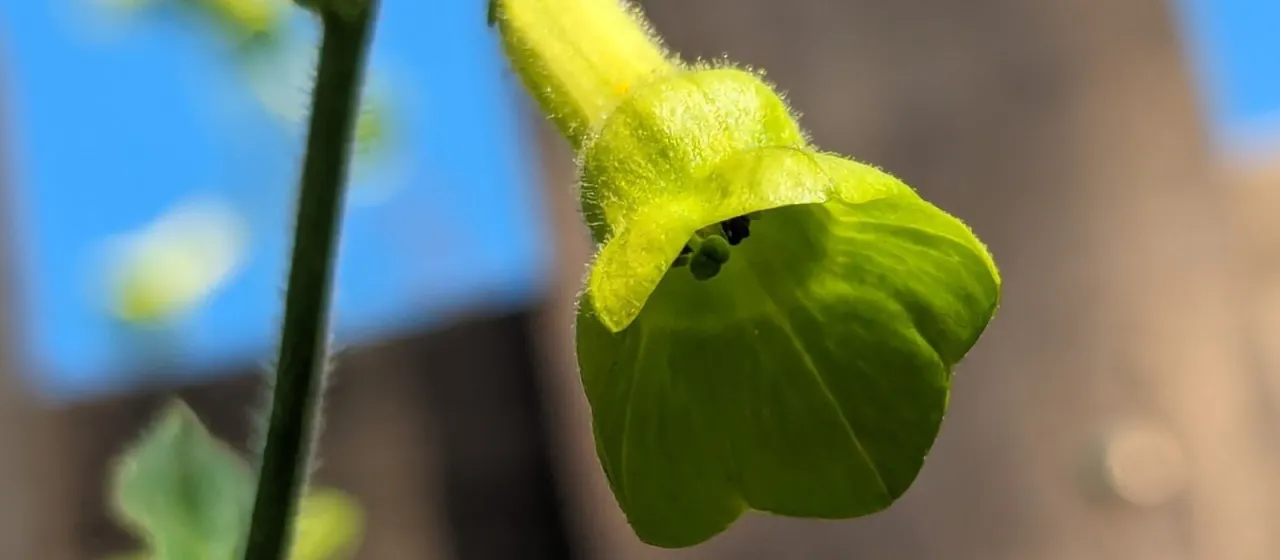
Langsdorff's tobacco (Nicotiana langsdorffii) is a unique species within the Solanaceae family, widely recognized for its ornamental value rather than commercial tobacco production. It is an herbaceous annual that brings an elegant, architectural aesthetic to gardens with its distinct bell-shaped, nodding flowers.
The species is native to South America, particularly Brazil and Chile. While it thrives in the warm, humid conditions of its origin, it has become a popular garden plant in temperate regions globally. It is typically grown as an annual because it lacks the cold hardiness required to survive winter frosts in cooler climates.
Botanically, this plant stands out for its tall, slender stems that can reach heights of up to four feet. The leaves are ovate to lanceolate, providing a lush green base for the clusters of pendant, lime-green flowers. These blooms are not only visually striking but also possess a subtle fragrance, which is highly appealing in evening garden settings.
Successful cultivation requires a location with full sun to partial shade and fertile, well-draining soil. Irrigation should be consistent, ensuring the root zone remains moist but not waterlogged. For optimal performance, gardeners are advised to deadhead spent blooms to encourage further flowering throughout the summer season and to provide support for taller stems if planted in windy areas.
Economically and horticulturally, Nicotiana langsdorffii is used primarily for landscape design. It is frequently employed in borders, cottage gardens, and as a filler plant in floral arrangements. Its unique green coloration makes it a sought-after choice for designers looking for a sophisticated, natural color palette that complements both bold and pastel flower varieties.
- Growth cycle: Annual.
- Ideal soil: Loamy and well-drained.
- Pest management: Monitor for aphids and spider mites.
- Propagation: Seeds sown indoors before the last frost.