
Description
Nicotiana obtusifolia, widely recognized as desert tobacco, is a resilient herbaceous plant belonging to the Solanaceae family. As a wild relative of the commercially farmed Nicotiana tabacum, it displays remarkable evolutionary adaptations to harsh, arid environments. While not a large-scale commercial crop, it is of great scientific interest due to its physiological durability.
The plant originates from the Southwestern United States and Northern Mexico, primarily inhabiting desert scrublands, sandy washes, and canyon bottoms. Its ability to thrive in extremely dry conditions with minimal soil nutrients makes it a specialized species within its ecosystem. It is naturally dispersed across arid landscapes where few other plants can survive.
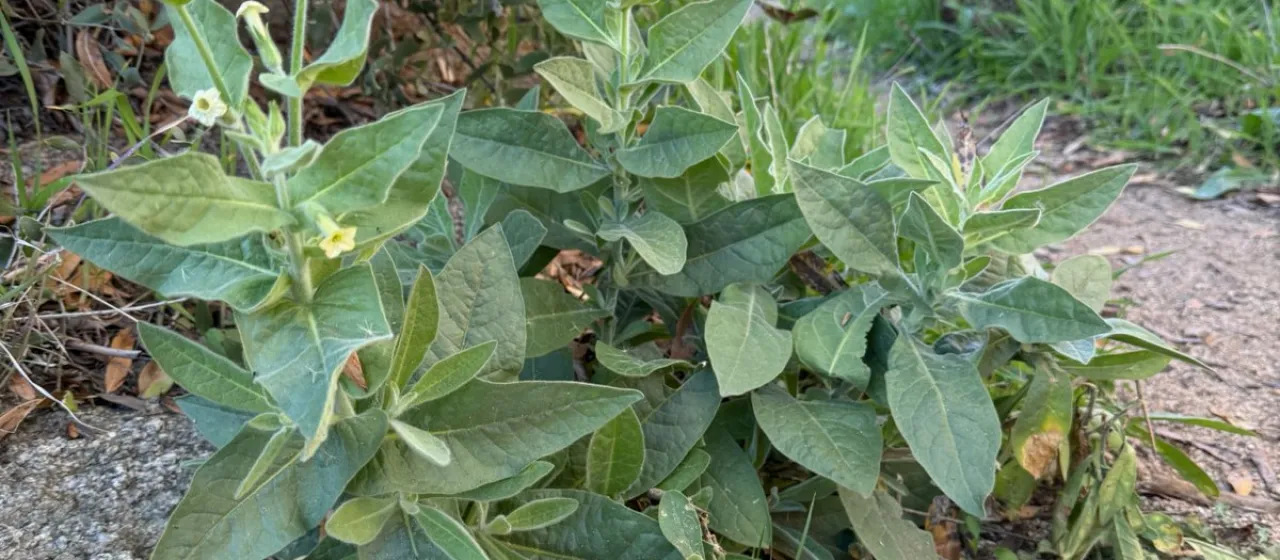
Botanically, this species is defined by its stout, hairy stems and distinctive obtuse (blunt) leaves that give it the name "obtusifolia." The plants typically grow to a height of 1 to 2 feet. They produce small, tubular, pale-colored flowers that bloom in clusters, which are highly efficient at attracting specific desert pollinators such as hawkmoths.
Regarding agricultural requirements, Nicotiana obtusifolia demands full sun exposure and extremely well-drained, sandy, or rocky soil. It is highly susceptible to root rot, so careful irrigation management is vital; the soil should be allowed to dry out almost completely between waterings. It does not require high levels of nitrogen fertilizer and performs better in low-fertility soils.
Its primary modern use is in scientific research and ethnobotanical studies regarding the hardiness of the Solanaceae family. Common pests include aphids and whiteflies, which can be managed with biological control methods. Diseases to watch for include fungal pathogens like Verticillium wilt, which typically appear if soil moisture levels remain too high for an extended period.