
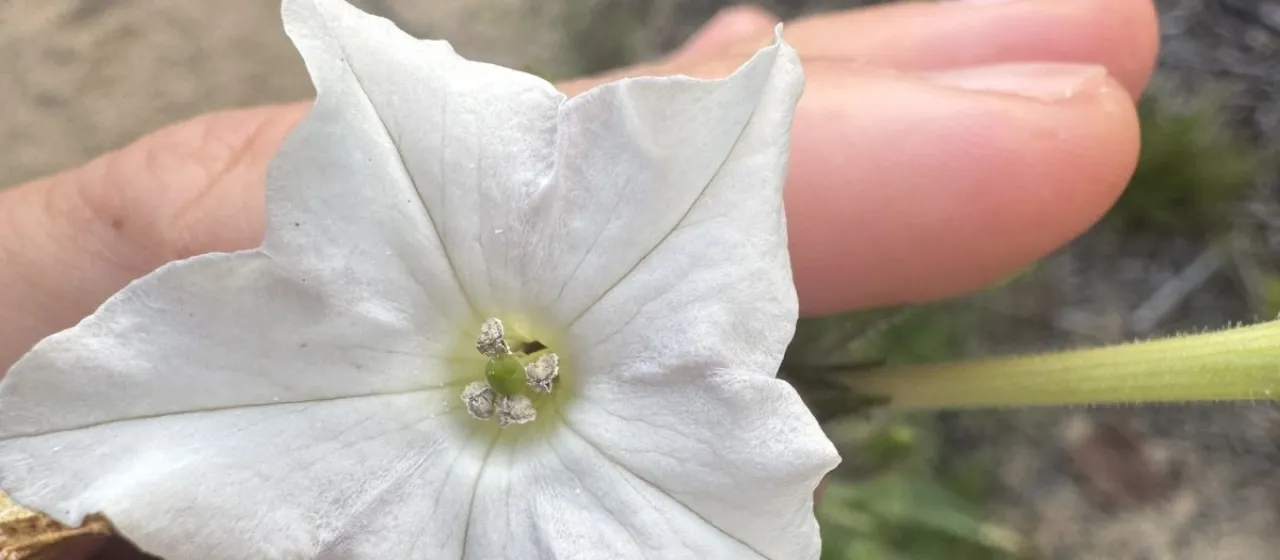
Description
Nicotiana quadrivalvis is an annual herbaceous plant belonging to the Solanaceae family. Often referred to in historical contexts as a specialized type of tobacco, it served as a vital agricultural resource for indigenous populations in North America, utilized extensively for ceremonial purposes and traditional smoking mixtures.
The plant originates from the western regions of North America. Its natural range historically stretched across diverse ecosystems, allowing it to adapt to various environmental conditions. Through centuries of selective cultivation by native tribes, the species developed specific traits that made it a reliable crop for local agricultural systems, distinct from the commercially dominant tobacco species.
Botanically, the plant is characterized by an erect, branched stem and broad, lance-shaped leaves. Its floral structure consists of tubular, often white or yellowish flowers that are typically self-pollinating. The defining feature of this species is its unique fruit capsule, which splits into four valves, distinguishing it from other members of the genus and providing an efficient mechanism for seed dispersal.
Regarding cultivation, this species thrives in climates with long, warm growing seasons and full sun exposure. It requires well-drained, nutrient-rich soil to reach its full vegetative potential. Recommended agricultural practices include regular hoeing to control weeds, proper spacing to ensure adequate airflow, and light fertilization to support the development of large, high-quality leaves during the active growth phase.
The economic and practical uses of this plant are currently limited to horticultural studies and ethnographic botanical research. Like many Solanaceae, it is susceptible to various pests, such as aphids and tobacco hornworms, as well as fungal pathogens in damp conditions. Effective disease management includes implementing crop rotation and maintaining soil hygiene to ensure the health of the population.