
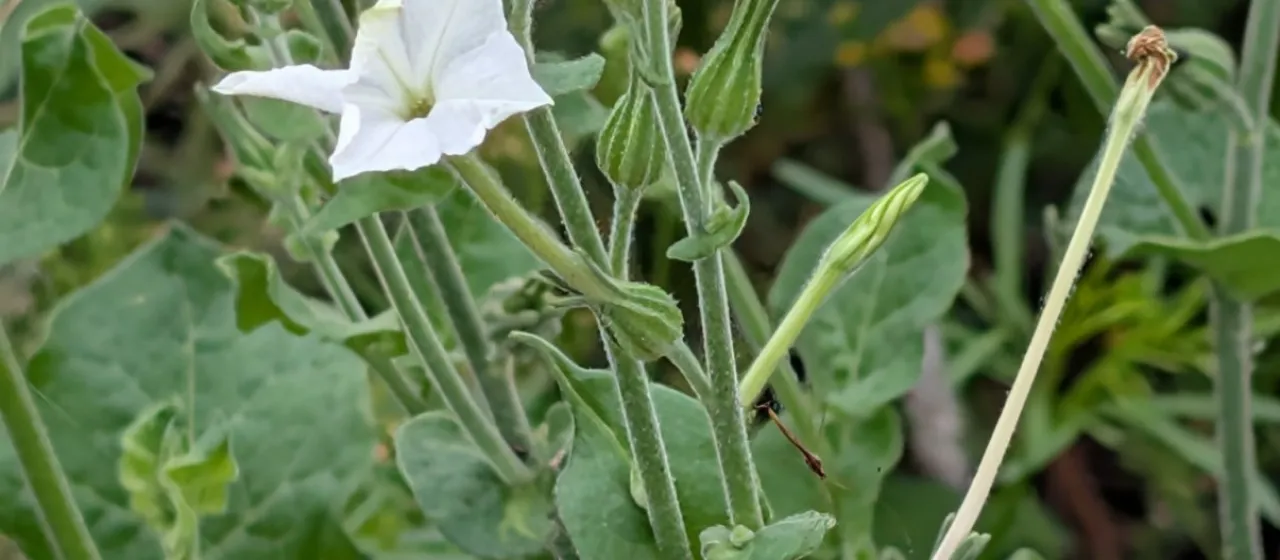
Description
Nicotiana repanda is a unique herbaceous annual species belonging to the Solanaceae family. It is distinct from the common tobacco plant (Nicotiana tabacum) and is widely recognized in botanical circles for its genetic resilience and unique morphological traits, particularly its wavy leaf edges, which serve as its primary identifying feature.
The native range of this species covers the arid regions of northern Mexico and parts of the southern United States. It naturally thrives in areas with well-drained, often calcareous soils, typically along riverbanks or in canyon areas where it can survive in semi-arid conditions. Its evolutionary history has made it highly adaptable to fluctuating water availability.
Botanically, the plant features a basal rosette of leaves followed by a central stem that can reach heights of approximately one meter. The flowers are white, trumpet-shaped, and possess a fragrant scent, usually blooming in the warmer months. These biological characteristics allow it to survive in environments where other tobacco varieties might struggle with soil mineral composition.
Cultivation requires specific environmental parameters, primarily focusing on full sun exposure and excellent soil drainage. It performs best in neutral to slightly alkaline soils. Gardeners and researchers must avoid waterlogged conditions, which are detrimental to the root system and quickly facilitate fungal infections. Consistent, moderate irrigation is the key to healthy plant development.
Regarding its utility, Nicotiana repanda is rarely cultivated for commercial tobacco production due to its low leaf yield. Instead, it is highly valued in plant breeding programs as a source of disease-resistance genes. Breeders utilize it to improve the hardiness of commercial tobacco crops against specific viral and fungal pathogens, making it a critical asset for agricultural biotechnology.
- Vulnerable to root rot in saturated soil conditions.
- Susceptible to common pests like aphids and spider mites.
- Requires protection from frost during the early growth stages.