
Description
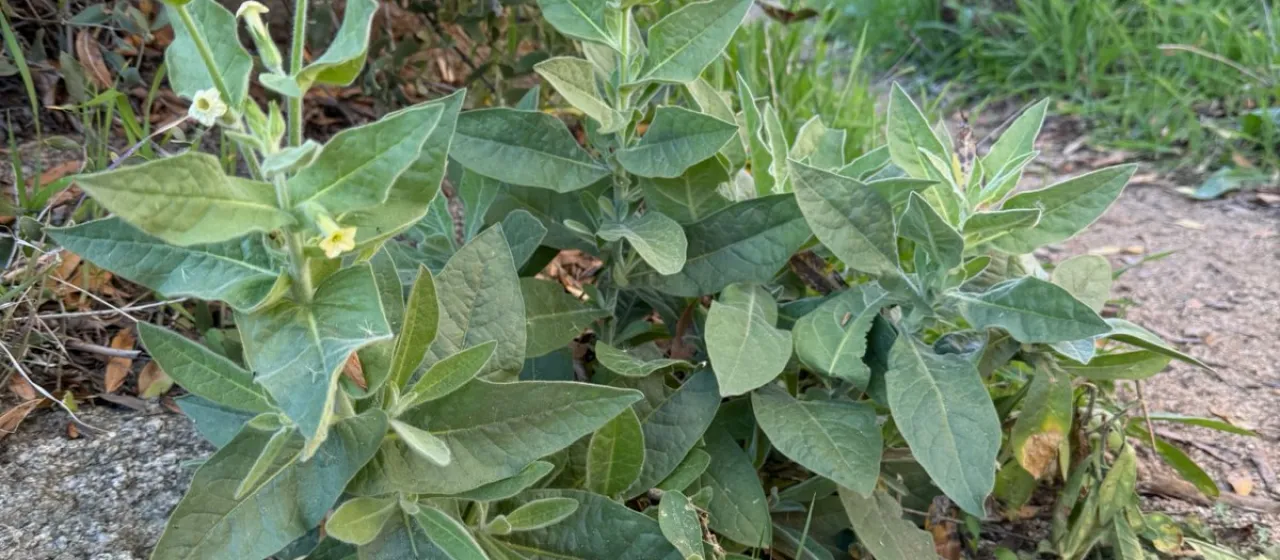
Nicotiana trigonophylla, commonly known as desert tobacco, is a species of wild tobacco belonging to the Solanaceae (nightshade) family. Unlike commercial tobacco varieties, this plant is specifically adapted to survive in extreme desert environments where water availability is minimal and temperatures are highly variable.
The native range of this species covers the arid regions of the Southwestern United States, including Arizona, California, Nevada, and New Mexico, as well as northern regions of Mexico. It thrives in various habitats such as rocky slopes, desert scrub, and dry washes, where it can capitalize on sporadic rainfall to complete its life cycle.
Botanically, it is a herbaceous perennial that typically grows up to 90 centimeters in height. Its leaves are triangular or lanceolate in shape and covered with glandular hairs, giving them a sticky texture. The plant produces tubular, cream-colored, or greenish-white flowers that are structurally designed for pollination by moths and other nocturnal insects.
Regarding cultivation and environmental requirements, the plant is a xerophyte, highly resistant to heat and drought. It does not require conventional agricultural inputs such as high-fertility soil or intensive irrigation. In fact, excessive moisture can be detrimental to the plant, as it is susceptible to root rot in waterlogged or poorly drained soils.
The plant has been used historically by indigenous populations for ritualistic and medicinal purposes, as it contains potent alkaloids, primarily nicotine. Due to its toxicity, it is not cultivated as a food crop. Typical pest pressures include common Solanaceae-attacking insects such as aphids, tobacco budworms, and leaf miners, which may affect the plant's growth during favorable moisture conditions.