
Description
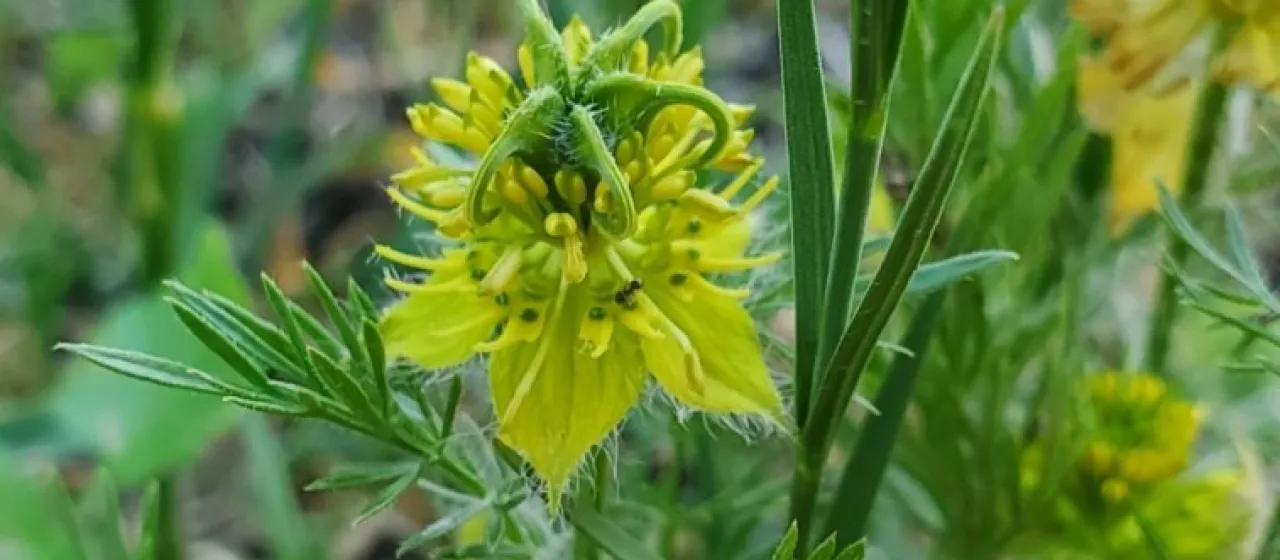
Fringed Nigella (Nigella ciliaris) is an annual herbaceous plant belonging to the Ranunculaceae family. It is distinct from other Nigella species primarily due to the ciliate-fringed bracts surrounding the flowers, which give the plant its specific botanical character and common name.
The origin of this species is traced back to the Mediterranean and Western Asia. It is cultivated in regions with warm, temperate climates where it serves as a niche crop for the pharmaceutical and cosmetic industries. Its adaptation to specific environmental conditions makes it a valuable species for specialized agricultural production.
Botanically, the plant features a slender, erect stem and finely dissected foliage. The flowers are solitary, protected by a delicate whorl of fringed bracts. The fruit is a capsule (follicle) containing numerous small, black seeds rich in essential oils and bioactive chemical compounds necessary for its economic application.
Agronomic requirements for this crop include well-drained, sandy loam soils with a neutral pH level. It is relatively drought-tolerant but requires consistent moisture levels during the flowering phase to ensure optimal seed yield. Proper field management involves early season weed control and spacing to maximize photosynthesis.
The primary economic use is the extraction of medicinal oils and aromatic seeds. Producers should be aware of potential agronomic threats during the growing season. The major pests and diseases that affect this crop are:
- Powdery mildew under conditions of high humidity and poor air circulation.
- Root rot caused by overwatering or poorly drained field soil.
- Aphids that cluster on tender new shoots and buds.
- Spider mites, which thrive in hot, arid weather conditions.