
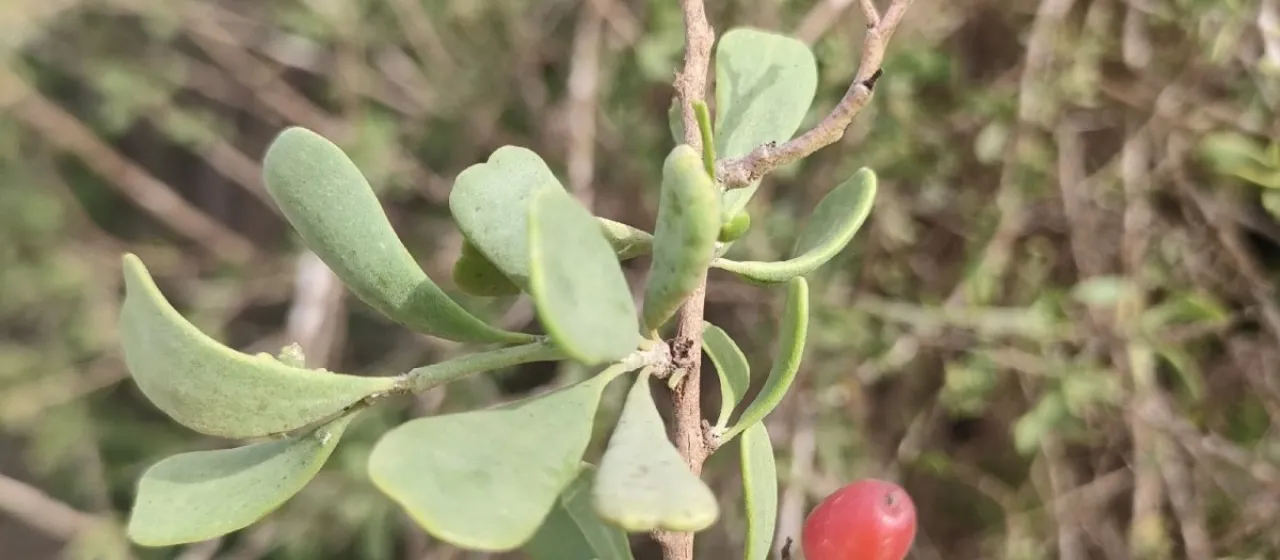
Description
Nitraria retusa is a perennial shrub belonging to the Zygophyllaceae family. As a specialized halophyte, it has evolved to thrive in environments where soil salinity levels exceed the tolerance of traditional agricultural crops, making it a critical species for the restoration of arid and saline ecosystems.
Originating from the arid zones of North Africa and the Middle East, this plant has adapted to harsh desert landscapes. It is commonly found in sandy or rocky terrains, as well as on the fringes of salt pans. Its ability to colonize these challenging environments makes it a vital component in land rehabilitation and stabilization projects globally.
Botanically, Nitraria retusa is characterized by its succulent leaves, which are an adaptation to minimize water loss through transpiration. The plant possesses a robust and extensive root system, allowing it to tap into deep soil moisture. It produces small, succulent fruits that transition in color during the ripening process and are an important food source for desert wildlife.
In terms of agricultural requirements, the species is highly photophilous and requires full sun exposure. It prefers sandy or loamy soils with high alkalinity and salinity content. Successful cultivation typically involves ensuring proper drainage and protection of seedlings during the establishment phase, after which the plant becomes exceptionally hardy and resistant to drought.
The economic value of this plant is multifaceted. It serves as a tool for combating desertification and wind erosion. Furthermore, its edible fruits are consumed locally, and the foliage acts as a supplemental grazing resource for camels in some regions. Given its resistance to local pests and diseases, it represents an untapped potential for sustainable agriculture in hyper-arid climates.
- Salt tolerance
- Drought resistance
- Soil erosion control
- Edible fruit potential
- Low maintenance requirements