
Description
Nitraria schoberi is a resilient shrub species belonging to the family Nitrariaceae. Recognized for its exceptional salt tolerance, this plant is an essential halophyte that thrives in extreme environmental conditions where conventional crops fail to establish. It serves as a vital component in modern desert agriculture and environmental restoration projects, playing a key role in the reclamation of saline soils.
The native distribution of this plant spans arid regions across Central Asia, the Middle East, and parts of Eastern Europe. It is naturally found in semi-desert landscapes, salt marshes, and sandy areas. Due to its evolutionary history, it has become perfectly adapted to high temperature fluctuations and minimal annual precipitation, making it a sustainable choice for farming in water-stressed regions.
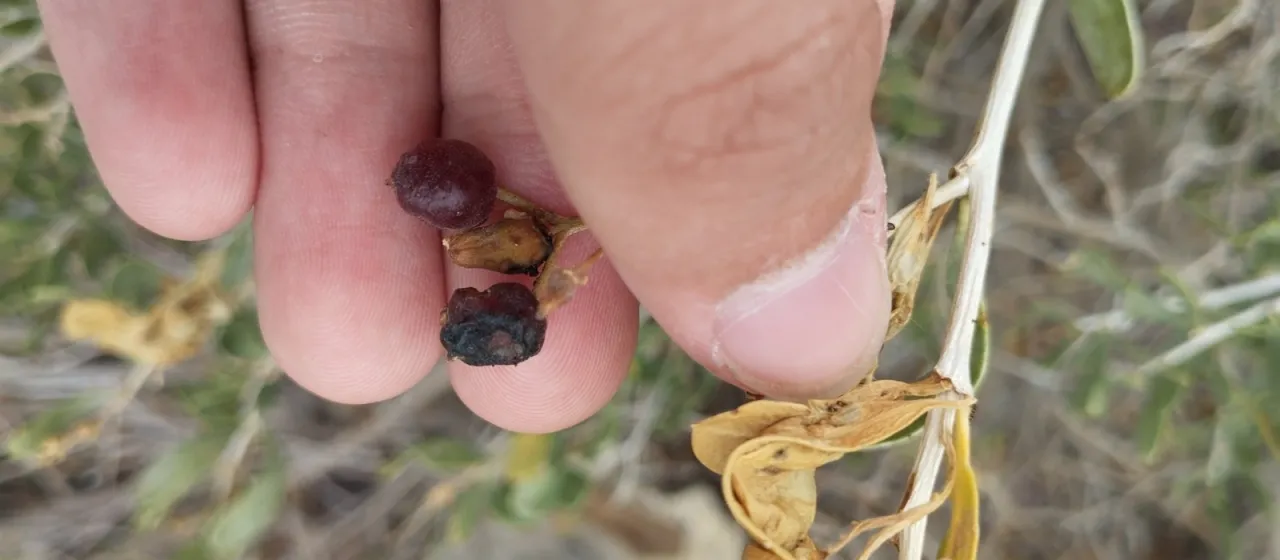
Botanically, Nitraria schoberi is characterized by a dense, thorny, and highly branched structure, typically growing between 1 to 2 meters in height. Its succulent leaves help retain moisture, while its deep-reaching root system allows it to stabilize loose sand dunes effectively. The plant produces edible berries that turn from red to deep purple, containing various nutritional compounds, including antioxidants and minerals.
Agronomic requirements are focused on high sunlight exposure and drainage. The plant does not require nutrient-rich soils, as it is naturally optimized for saline substrates. When establishing a plantation, cultivators should focus on adequate spacing to allow for light penetration. While the plant is drought-resistant, supplementary irrigation during the establishment phase can significantly improve the growth rate and berry yield.
The primary economic and agricultural uses include:
- Soil stabilization and protection against wind erosion in desert regions;
- Use in food production, including jams, beverages, and functional foods;
- Extraction of bioactive compounds for the pharmaceutical and cosmetic industries;
- Restoration of degraded saline lands to improve agricultural biodiversity.
Regarding pest and disease management, Nitraria schoberi exhibits high natural resistance. It is rarely affected by common fungal pathogens or major pests, making it an excellent candidate for organic farming. The main environmental challenges involve preventing waterlogging, which can damage the roots. This inherent resilience eliminates the need for intensive pesticide use, ensuring low-cost and environmentally friendly cultivation.