
Description
Noaea mucronata is a perennial subshrub species belonging to the Amaranthaceae family. It is a highly specialized xerophyte, biologically structured to thrive in the harsh environments of arid and semi-arid regions where conventional crops fail to establish.
The plant is native to a broad geographical range, including regions of Western Asia, the Caucasus, Iran, and Central Asia. It typically occupies habitats characterized by rocky, gravelly, or saline soils. Due to its evolutionary history, the species is perfectly adapted to climates with high temperatures and negligible annual precipitation.
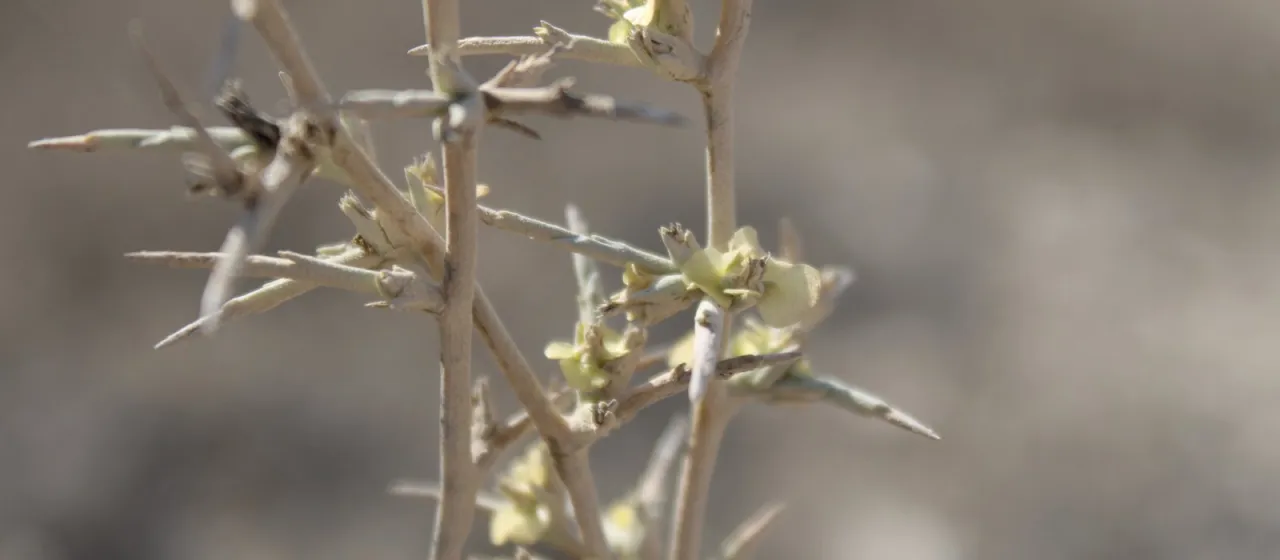
Botanically, Noaea mucronata exhibits a dense, branching habit with stems terminating in sharp spines. These spines serve as an evolutionary defense mechanism against excessive herbivory. The leaves are generally small and succulent-like to reduce water loss. The root system is extensive and deep-seated, allowing the plant to exploit moisture reserves deep within the soil profile.
In terms of agricultural management, this species is not cultivated for mass production but is significant for its role in ecological restoration. It is often utilized in projects aimed at rangeland improvement and the stabilization of sandy soils to prevent desertification. It requires no irrigation or fertilization, making it a low-input option for degraded lands.
Economically, its primary value is as a source of rangeland fodder for camels and small ruminants. It serves as a vital winter forage when other plant species are dormant or unavailable. While it is rarely affected by standard agricultural pests due to its tough composition and saline-tolerant physiology, it faces natural pressure from extreme grazing density in some arid regions.