
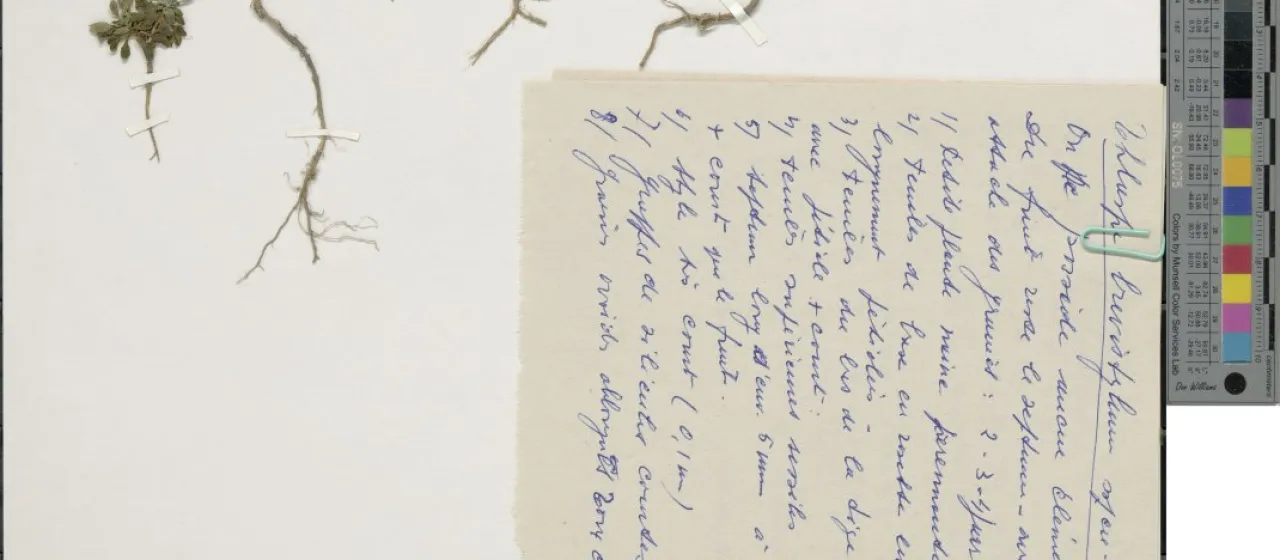
Description
Noccaea brevistyla is a herbaceous plant belonging to the Brassicaceae family. As a wild relative of various agricultural crops, it attracts the attention of plant breeders and botanists interested in exploring the genetic diversity and resilience of the cruciferous group under challenging environmental conditions.
The plant originates from mountainous regions, where it has evolved to thrive in rocky, alpine environments. While not a commercial crop in the traditional sense, its range of distribution provides valuable insights into how plants adapt to nutrient-poor soils and extreme temperature fluctuations. It remains a wild species, primarily occupying natural ecological niches.
Botanically, the plant presents a rosette growth form with distinct foliage and upright stems that bear clusters of small, white or pale flowers. The defining morphological trait, which gives the species its name, is the presence of a short style on the ovary, serving as a critical feature for taxonomical identification within the genus Noccaea.
Regarding cultivation requirements, the species prefers well-drained, calcareous substrates and cooler climates. It exhibits high tolerance to environmental stress, including frost and periodic moisture deficits. In experimental agricultural settings, providing adequate light and preventing competition from invasive grasses are the most vital aspects of maintaining healthy populations.
The economic potential of Noccaea brevistyla lies in its genetic potential for crop improvement, particularly for traits like drought resistance and soil nutrient efficiency. Typical pests and diseases include those common to the cabbage family, such as clubroot, downy mildew, and various species of flea beetles, which require monitoring if the plant is kept in experimental nurseries.