
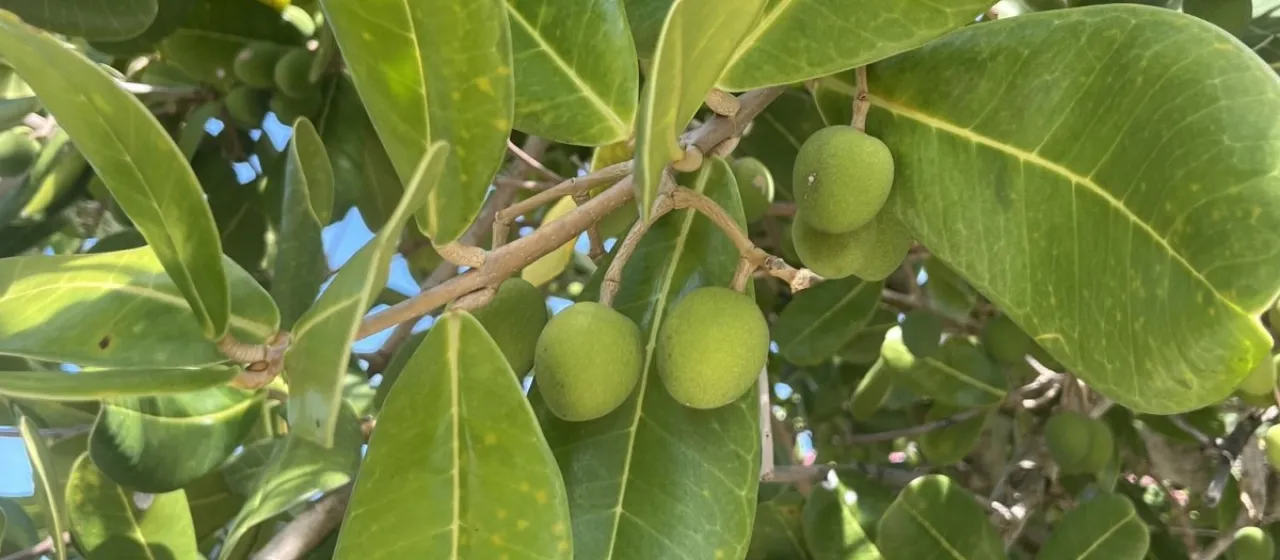
Description
Madagascar olive (Noronhia emarginata) is an evergreen fruit-bearing tree belonging to the Oleaceae family. Often referred to as the Madagascar olive, this plant is a notable member of the olive family, valued both for its glossy ornamental foliage and its edible, plum-like fruits that provide a unique flavor profile in tropical agroforestry.
The species originates from Madagascar, where it thrives in humid tropical environments. Its natural range has expanded through cultivation to include various parts of the Caribbean, South Florida, and other warm regions globally, where it has proven to be an adaptable crop for home gardens and small-scale commercial fruit production.
Botanically, the tree typically reaches heights of 5 to 10 meters. It is characterized by dense, dark green, leathery leaves with a distinctive emarginated (notched) tip. The flowers are relatively inconspicuous, appearing in clusters, while the fruit is a fleshy drupe that matures to a dark purple or black color, containing a single large seed protected by thin, edible skin and flavorful pulp.
Regarding cultivation requirements, Noronhia emarginata prefers well-draining, nutrient-rich soils with a slightly acidic to neutral pH level. While the tree shows moderate tolerance to drought once established, it requires consistent moisture during the fruiting season to ensure optimal crop size and quality. It demands a position with full sun exposure to maintain its dense canopy structure.
In terms of agricultural management, the tree is generally hardy but can be susceptible to common pests such as scale insects, mealybugs, and sometimes fungal leaf spots in high-humidity areas. Proper spacing and airflow within the canopy are essential for disease prevention. Major uses include fresh fruit consumption and processed goods like jams, which are appreciated for their distinct sweet-tart notes.